
In April 2026, AFRINIC opened a new Community Consultation on the Review of Bylaws and asked members to propose amendments that would, in the organisation’s words, align the text with legal requirements, best practice standards, and long term operational needs. That request is not an administrative footnote. For Africa and the Indian Ocean region, AFRINIC’s bylaws are the constitutional architecture of stewardship over Internet number resources, including who can vote, how fiduciary obligations are defined, how elections are designed, and how the organisation can defend its registry integrity when contested.
The consultation is taking place after a period in which AFRINIC’s institutional continuity became a matter of international concern, documented by the court appointed receiver and the board itself in a Member Update on organisational stability and ongoing legal challenges. AFRINIC is emerging from years of litigation, interrupted governance, and a receivership that tested the resilience of a system that was designed to be stable, predictable, and largely insulated from geopolitical pressure. The central question for this bylaws review is therefore not whether reform is desirable, but whether reform is being attempted in the right sequence, on a sufficiently stable foundation, and with a clear diagnosis of what failed and why.
The Board’s own priorities, as described in the March 2026 member update, include recruiting a substantive CEO, restoring stable operations, and addressing governance gaps within the guardrails of existing bylaws, even as litigation continues to impose cost and delay. Those priorities sit uncomfortably alongside the compressed tempo of the bylaws review process set out in the BRC Terms of Reference and announced publicly in the appointment notice for the Bylaws Review Committee. A constitutional review is being asked of the community while the institution is still stabilising its executive leadership, still mapping its legal landscape, and still waiting for several court processes to conclude.
It is tempting, particularly for those outside the number resource community, to treat AFRINIC’s bylaws as an internal governance document of a private association. But AFRINIC is one of five Regional Internet Registries recognised through the framework described in Internet Coordination Policy 2, and its legitimacy is interwoven with the credibility of the broader Internet Numbers Registry System. The moment AFRINIC’s core functions were threatened by prolonged litigation and governance paralysis, other institutions, including ICANN and the Number Resource Organization, began to issue unusually direct public statements. That alone signals that constitutional choices at AFRINIC are no longer purely regional questions.
The current review also arrives before the first full Members General Meeting under a reconstituted board. After the September 2025 elections, the board and the receiver described the need to restart work that had been paused since 2022 and to realign governance as the organisation entered 2026, in a joint communiqué outlining committee mandates and institutional priorities. The implicit premise was that governance repair would be phased, sequenced, and anchored in member legitimacy. A bylaws rewrite conducted too early, or too quickly, risks converting a transitional period into a permanent constitutional settlement shaped more by crisis dynamics than by long term continental interest.
This article argues that AFRINIC’s 2026 bylaws review should be treated as a constitutional moment under structural pressure, and that the community should resist the impulse to treat speed as evidence of progress. The record of previous amendments shows that AFRINIC’s constitutional legitimacy has been built through prolonged consultation, published change tables, and formal votes recorded in meeting minutes, including the AGMM 2020 process and its draft minutes documenting which special resolutions passed and failed. If constitutional change is to restore trust after crisis, it must be built on the same deliberative discipline, not on urgency narratives produced by a still contested institutional environment.
Why I will not comment on the new bylaws
I have read the current consultation materials and the BRC’s mandate carefully. I am not submitting line by line drafting comments to the committee in this consultation cycle, even though the invitation is open through AFRINIC’s consultation portal and the process is described in detail in the Terms of Reference. That is a deliberate decision. It is rooted in a view that constitutional engineering without a shared diagnosis risks becoming a substitute for accountability, rather than a framework for it.
My decision is also informed by institutional role and legitimacy. AFRINIC’s bylaws define distinct categories of members and the rights attached to each, including Resource Members, Registered Members, and Associate Members, as reflected in Article 6 of the current bylaws and summarised on AFRINIC’s membership information page. A line by line drafting exercise is, properly, a function of those who bear the formal obligations and liabilities of membership in the Mauritian corporate structure. My intervention here is instead to place the process in strategic context and to question whether the current sequencing can plausibly deliver continental legitimacy.
The BRC’s mandate is broad. It is asked to produce a revised bylaws text that is aligned with legislative requirements and best practice standards, and to propose a model that supports long term organisational needs. Those phrases appear in the Terms of Reference, but the supporting materials do not yet provide a consolidated public mapping of which Mauritian statutory provisions are driving which proposed changes, nor which external benchmarks are being used as comparators. In constitutional design, the legitimacy of the outcome depends as much on the transparency of the rationale as on the elegance of the drafting. Without a publicly documented problem statement, the community risks debating wording rather than addressing failure modes.
The March 2026 member update describes ongoing litigation that includes attempts to invalidate directors democratically elected in September 2025, objections to ending receivership, challenges to IP allocations approved by the receiver, and a continuing winding up petition, alongside earlier efforts to freeze AFRINIC’s bank accounts and to attach unallocated IPv4 resources. These details are not speculative. They are set out by AFRINIC itself in the Member Update, and they define a governance environment in which constitutional change can be weaponised by litigants, whether by claiming procedural defects, alleging ultra vires decisions, or seeking injunctions against implementation. In that environment, my choice is to focus on stabilisation conditions rather than on drafting preferences.
There is also a prudential dimension. AFRINIC has explicitly urged members to scrutinise representation requests and legal documents before signing them and to rely on official channels for factual updates, in both its Member Update and earlier advisories to resource members on third party communications. A consultation response can be recontextualised, selectively quoted, or introduced as evidence of community division or support in later proceedings. Where the institutional terrain is still legally contested, restraint is not disengagement. It is a way of refusing to contribute to a record that may be used to accelerate outcomes that the community has not fully debated.
None of this implies that the bylaws should remain frozen. On the contrary, the current board has a legitimate mandate to restore institutional function and to ensure AFRINIC “never returns to the dark days”, as it put it in the March 2026 update. But constitutional reform has to be paced, sequenced, and anchored in member legitimacy. My argument is therefore not a rejection of reform, but a caution against reform that is treated as an emergency deliverable. AFRINIC’s own history of deliberate amendment, visible across its archived bylaws versions and the documentary record of member votes, offers a more credible path.
AFRINIC’s bylaws as critical infrastructure governance
AFRINIC is frequently described as a technical coordination body, and it is. It manages IP address blocks and Autonomous System Numbers for Africa and the Indian Ocean region, maintaining registry data through services such as WHOIS, RPKI, and reverse DNS. But the governance of that technical function is a form of critical infrastructure stewardship. The global system recognises five Regional Internet Registries, and their roles are framed in documents such as the NRO’s Internet Coordination Policy 2 and, increasingly, in the evolving draft of the RIR Governance Document intended to update ICP 2. In this architecture, AFRINIC’s bylaws are not merely internal rules. They are the enforceable instrument through which a region exercises custodianship over a scarce global resource.
The scarcity of IPv4 makes that custodianship economically and politically consequential. The IANA pool of unallocated IPv4 addresses was exhausted in 2011, documented in IANA’s IPv4 exhaustion report, and each RIR has since managed the decline of its remaining pool with increasingly restrictive policies. AFRINIC’s own IPv4 exhaustion page situates its stewardship obligations in this context. When a finite resource becomes both commercially valuable and necessary for network growth, the governance rules that determine allocation, transfer, enforcement, and appeals become strategic instruments, not procedural niceties.
AFRINIC’s bylaws specify the membership classes, voting rights, director responsibilities, committee structures, and dispute mechanisms that together determine who can steer the institution. The current text, published as the AFRINIC Bylaws (Constitution) 2020, is explicit about membership rights, board functions, and the place of consultative bodies such as the Council of Elders. These are the provisions that litigants and reformers alike reach for when contesting elections, challenging board mandates, or arguing that specific actions fall outside authority. In a period of legal contestation, constitutional clarity becomes an operational prerequisite.
The global registry system rests on trust that each RIR can enforce policy consistently, maintain registry accuracy, and protect unallocated resources from capture. That is why AFRINIC’s crisis prompted interventions beyond the region. In 2021, ARIN’s CEO published a detailed account of why the dispute mattered to the whole ecosystem in ‘AFRINIC and the Stability of the Internet Number Registry System’. ICANN later issued updates stressing the importance of governance restoration, including its September 2023 notice acknowledging the appointment of an official receiver. These statements were not acts of diplomacy. They were signals that the institutional stability of one RIR is a systemic dependency for all.
AFRINIC’s multistakeholder legitimacy is not abstract. It is operationalised through the Policy Development Process that governs how number resource policies are proposed, debated, and ratified, described on AFRINIC’s PDP overview. Bylaws determine how that process interfaces with board oversight and legal obligations under Mauritian company law. When bylaws are altered, the balance between community driven policy development and board level fiduciary responsibility can shift. That is why bylaws review must be treated as institutional design, not simply textual clean up.
Institutional memory: AFRINIC has revised its constitution before
AFRINIC’s constitutional evolution has never been static. In the early period of its formation, governance documents were treated as an integral part of the institution building process. The NRO progress report submitted to ICANN in July 2004 records that a new article to the AFRINIC constitution was adopted and that an election of directors followed an established process. AFRINIC’s own historical note on AfriNIC 1 in Dakar, May 2004 similarly points to the adoption of constitutional provisions as part of the first policy meeting cycle. The lesson is that constitutional design was, from the beginning, linked to legitimacy and regional ownership.
AFRINIC provides a public archive of its bylaws versions through its Corporate Documents repository. The archived PDFs allow the community to track how definitions, voting mechanisms, and board structures evolved, including the 2007 bylaws, the 2012 version, and the 2016 constitution that preceded the current 2020 text. This archival transparency is significant. It makes constitutional debate possible on evidence rather than memory, and it offers a baseline for assessing whether proposed reforms represent continuity, correction, or rupture.
Recent history underscores that constitutional revision at AFRINIC has typically been deliberate rather than accelerated. In 2018, the Governance Committee initiated a community review and later extended its deadline, as reflected in the November 2018 community mailing list call for comments. In 2019, AFRINIC again issued a formal call for comments on the bylaws and noted that participation had been low, prompting an extension. These episodes matter because they illustrate an enduring governance challenge in membership organisations: legitimacy depends not only on formal voting thresholds, but on whether the community feels it had adequate time and information to engage.
The most documented cycle of constitutional change occurred between 2018 and 2020. AFRINIC published a bylaw changes review page and a detailed table of proposed changes, and then brought 28 special resolutions to the 2020 Annual General Members Meeting. The draft minutes of that meeting record, by resolution number, which amendments passed and which failed, providing a rare level of transparency in institutional change. The AGMM 2020 minutes PDF explicitly lists the 14 resolutions that met the 75% threshold and the 14 that did not.
AFRINIC’s current bylaws text reflects that 2020 cycle. In its preface, the Bylaws (Constitution) 2020 page notes that it is the fifth version and that it replaced the December 2016 text. The Governance Committee later reiterated this process in its May 2021 communique, which also points members back to the bylaws page as the authoritative consolidated text. These references are important because they show that constitutional revision has previously been positioned as a mature, consultative exercise, not as a short window reaction to crisis.
The current review began with a call for volunteers to serve on the Bylaws Review Committee, followed by a board appointment notice and a publicly posted terms of reference. That sequence is positive. It reflects an intention to anchor the work in community participation. But the deeper question is whether the institutional conditions that supported deliberate reform in 2018 to 2020, including a functioning board and a relatively stable legal environment, exist today. The answer, based on AFRINIC’s own documentation of ongoing litigation and contested governance, is that they do not yet exist in full.
The AGMM 2020 record also illustrates another institutional fact that should temper any rush today. Members rejected half of the proposed constitutional changes. That outcome demonstrates that AFRINIC’s community is capable of discriminating between reforms it supports and reforms it does not, even when proposals are framed as governance strengthening. The bylaws page notes that only 14 special resolutions achieved the required 75% majority. The draft minutes provide the definitive list of passed and failed items. Constitutional change therefore requires persuasion, not merely procedure.
This institutional memory matters as AFRINIC enters a period of external scrutiny. The ICP 2 framework emphasises that the recognition, restructuring, or potential withdrawal of authority from an RIR would require community consensus expressed through global policy mechanisms, a principle reiterated in both the original ICP 2 text and the evolving RIR Governance Document. AFRINIC’s constitutional legitimacy is therefore not merely internal. It is part of a global understanding that RIRs are self governing within a stable and predictable system of mutual recognition. A rushed constitutional settlement in one region can reverberate in debates about the whole system’s robustness.
Crisis governance: litigation, receivership, and institutional paralysis
The immediate context for the 2026 bylaws review is the governance crisis that erupted around AFRINIC’s dispute with Cloud Innovation Ltd, a member that AFRINIC has described as being associated with a large volume of IPv4 addresses and subject to compliance concerns under the Registration Service Agreement. AFRINIC’s August 2022 communique and its accompanying press release on the litigation provide the clearest official narrative of the dispute’s escalation. ARIN’s CEO later summarised why the conflict mattered system wide in his 2021 analysis of registry stability, highlighting that legal action was being used in ways that threatened core registry operations.
The pattern described by AFRINIC is not limited to one proceeding. In the March 2026 member update, the board identifies earlier attempts to freeze AFRINIC’s bank accounts in July 2021 and to obtain an attachment order over unallocated IPv4 resources in September 2021. It also describes applications seeking to prevent AFRINIC from allocating IP resources and a winding up petition filed in July 2025. These are specific claims made by the organisation itself in the Member Update, and they illustrate why governance reform cannot be detached from litigation strategy. When core functions such as resource allocation and financial operations become targets of legal action, constitutional design becomes an instrument of institutional survival.
Receivership was the formal institutional response to the governance deadlock. In September 2023, ICANN published an update acknowledging the appointment of an official receiver for AFRINIC, a rare step for an institution that generally avoids involvement in RIR internal affairs. The Number Resource Organization similarly issued a statement on the appointment of an official receiver, framing the decision as a mechanism to restore functional governance. Whatever one’s view of receivership as a governance tool, its very existence demonstrates that AFRINIC’s constitutional environment had become incompatible with normal self governance.
Receivership did not resolve the crisis quickly. Court procedures and appeals delayed the return to elected governance, and by early 2025 the Supreme Court of Mauritius appointed a new receiver, a change summarised in ICANN’s March 2025 update on the receiver appointment. The prolonged period without an elected board created conditions in which operational decisions, including whether to allocate resources or implement policy, could be contested as exceeding a receiver’s mandate. That uncertainty should inform how the community approaches constitutional reform today: a governance document cannot be robust if it leaves ambiguous who can act, on what authority, and with what safeguards during exceptional circumstances.
The June 2025 board election attempt became another inflection point. AFRINIC published a Notice to Members and the Internet Community explaining that the receiver had annulled the election after suspicions of irregularities, and it subsequently issued an advisory to resource members on third party communications urging caution about representation requests. ICANN’s correspondence to the receiver in June and July 2025, including its 25 June letter and 16 July open letter, shows that external institutions were tracking the situation closely. These documents form part of the public record demonstrating that electoral integrity and proxy mechanisms were not marginal concerns but central to governance restoration.
By September 2025, AFRINIC conducted board elections that the organisation later described as having an unprecedentedly high turnout, and it announced the results publicly in its Board Election Results 2025 notice. Regional and international stakeholders responded, including Smart Africa’s statement welcoming the election results and reaffirming commitment to collaborative reforms. The AFRINIC board’s March 2026 update treats this election as the starting point for a new chapter, listing priorities such as CEO recruitment and governance repair. That sequencing matters: elections restored formal legitimacy, but legitimacy is not the same as stability, particularly while litigation continues.
The wider registry community also treated the elections as a systemic issue. The NRO issued a statement on the AFRINIC board elections, underscoring the significance of restoring elected governance. The existence of such statements is itself evidence of the stakes: an RIR is not a private club. It is a node in a global coordination regime. When governance collapses, trust in the entire regime is tested. When governance is restored, the restoration is watched, interpreted, and sometimes contested by actors who have interests in the outcome.
This crisis chronology explains why a hurried bylaws review is strategically risky. Constitutional amendments drafted in a stable environment are evaluated as improvements. Amendments drafted in a contested environment are evaluated as instruments. They can be challenged as illegitimate, exploited as procedural vulnerabilities, or used to entrench temporary power balances. AFRINIC’s own description of a “web of litigation and procedural roadblocks” in the March 2026 member update is a warning that any new constitutional text will be tested, not only in community debate, but in court.
Sequencing matters: stabilisation must precede constitutional redesign
The consultation materials for the 2026 review emphasise alignment with legislative requirements, best practice, and long term needs, and they provide a timeline for comments and submissions. The Community Consultation page is clear about procedure. What is less clear is the underlying diagnosis. Constitutional reform, in institutional design terms, is not simply the correction of drafting defects. It is the codification of lessons from failure. Yet AFRINIC has not yet published a consolidated, post crisis assessment that maps the causal chain of the governance breakdown, identifies which bylaws provisions were exploited or proved inadequate, and distinguishes between legal vulnerabilities and operational mistakes.
AFRINIC’s March 2026 member update is the closest thing to such an assessment in the public domain. It narrates litigation strategies, describes attempted injunctions, and situates the post election period as a return to normalcy. But it is not a governance review document in the formal sense. It does not, for example, present a matrix of vulnerabilities, propose options, evaluate trade offs, or report on internal controls. The member update is an important narrative baseline, yet it also underlines why timing matters: constitutional redesign should follow a formal diagnosis process whose conclusions can be debated, rather than proceeding on the assumption that crisis itself is sufficient justification.
Many global Internet governance institutions treat major structural change as a consequence of periodic organisational review. ICANN, for example, has bylaw mandated review mechanisms overseen through bodies such as the Organizational Effectiveness Committee, which monitor whether structures remain fit for purpose. AFRINIC’s bylaws review could serve a similar function, but only if it is grounded in evidence about what failed. Otherwise, the review risks becoming a symbolic performance of reform, without resolving the structural incentives that permitted crisis escalation.
One argument for urgency is that bylaws must be aligned with legislative requirements. That may be correct. AFRINIC is incorporated in Mauritius and its bylaws repeatedly reference the Companies Act 2001, visible in the definitions section of the 2016 bylaws PDF and earlier versions. But if legal compliance is a driver of revision, the community should see a clear mapping of which provisions require amendment and why. Absent that transparency, members can neither assess necessity nor evaluate whether proposed solutions are proportionate. A constitutional review should not ask the community to accept the language of ‘legal requirement’ without documentation.
If “best practice standards” are a driver, it would be helpful for AFRINIC to state explicitly which benchmarks it has in mind. The NRO has already produced comparative tools such as the RIR Governance Matrix, which links to the governance frameworks and accountability mechanisms across the five RIRs. Using such benchmarks transparently can strengthen legitimacy by showing how a proposed provision aligns with, or intentionally diverges from, peer institutions. But relying on “best practice” as an undefined rhetorical device can have the opposite effect, particularly in a post crisis environment where suspicion of capture and procedural gaming remains high.
AFRINIC’s own list of priorities suggests a stabilisation first approach. The March 2026 update highlights operational stability, the strengthening of internal governance controls, and the recruitment of a substantive CEO. The board and the receiver’s October 2025 communiqué similarly frames 2026 as a period of institutional rebuilding. Constitutional redesign should logically come after these stabilisation steps have produced an evidence base about what mechanisms work in practice under stress. Otherwise, the community risks drafting a constitution for an institution that does not yet exist in its future operational form.
In post crisis governance, the distinction between stabilisation and redesign is not academic. Stabilisation is about restoring the minimum conditions for legitimate collective decision making, including predictable leadership, clear legal authority, and operational continuity. Redesign is about adjusting institutional rules for long term resilience. If redesign is attempted before stabilisation, the result can be the institutionalisation of fragility, because the constitution may encode crisis workarounds as normal rules. That risk is implicit in the logic of common resource governance highlighted in ‘The Commons’, which emphasises that rules must be appropriate to the nature of the resource and the conditions of its management.
This is ultimately why I do not wish to comment on the drafting specifics at this stage. The most consequential questions for the community are not about whether a clause should be reworded, but about whether AFRINIC has completed the stabilisation steps that make constitutional negotiation meaningful. These include resolving key litigation exposures described in the member update, clarifying electoral safeguards highlighted during the 2025 election annulment in the notice to members, and establishing an executive leadership structure capable of implementing reforms. Without those foundations, drafting detail risks becoming a distraction from strategic sequencing.
Representation risk and continental legitimacy
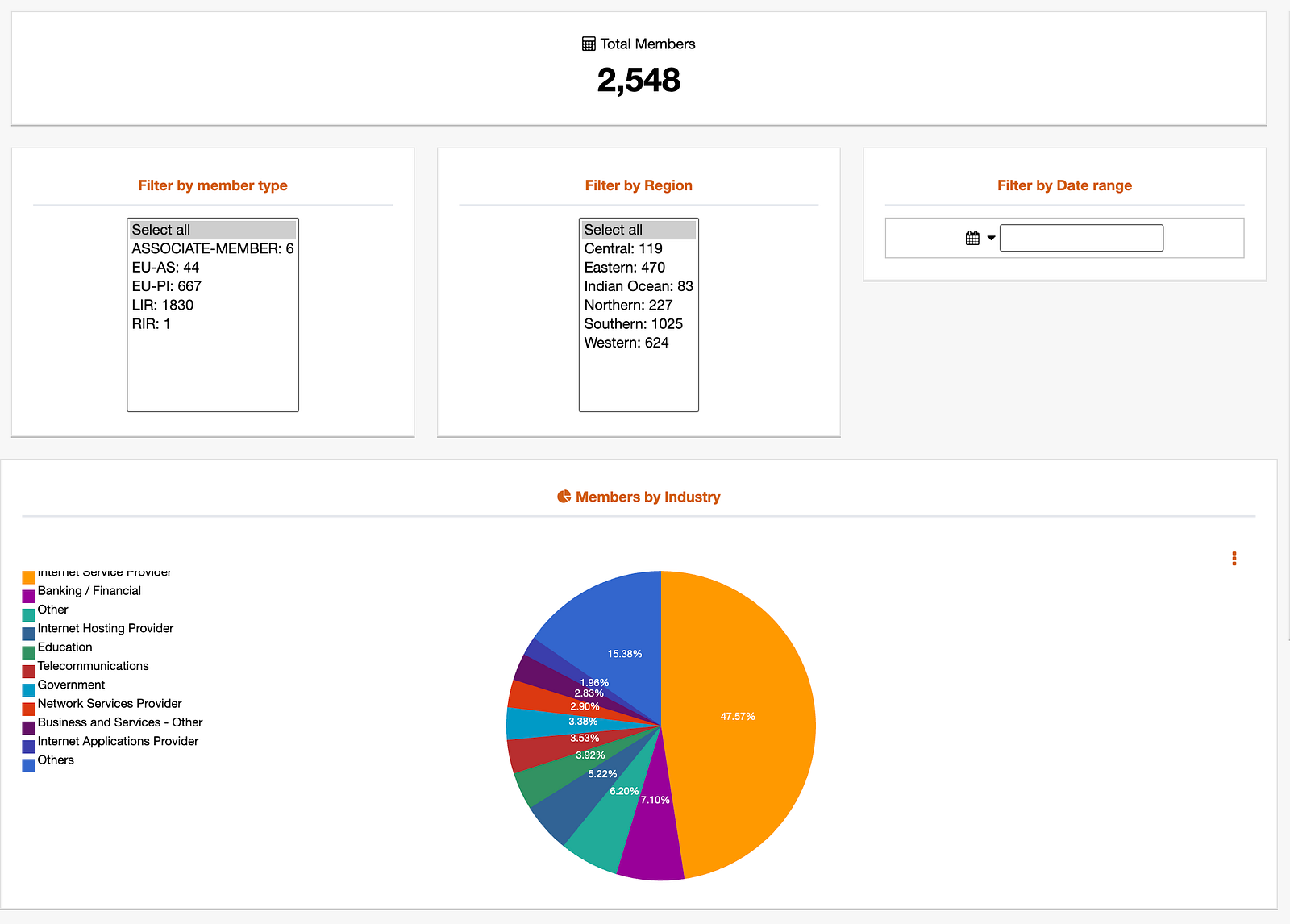
AFRINIC’s legitimacy is continental. It serves Africa and the Indian Ocean region as a single registry community, but it has historically tried to ensure geographic balance through governance design. The current Bylaws Review Committee Terms of Reference explicitly define six sub regions for representation, including Northern Africa, Western Africa, Central Africa, Eastern Africa, Southern Africa, and the Indian Ocean, in the BRC Terms of Reference. That design acknowledges a basic governance principle: legitimacy requires that no part of the service region feels structurally excluded from constitutional choices that will bind all.
However, formal representation on a committee does not by itself guarantee broad community engagement. AFRINIC’s own history shows that participation in bylaws consultations can be uneven, as the organisation acknowledged when it extended deadlines due to low response in its 2019 call for comments. The 2025 election cycle similarly illustrated that mobilisation can vary across actors and periods, prompting external concern in ICANN’s July 2025 correspondence and in AFRINIC’s notice on election irregularities. When participation rates vary, constitutional outcomes can reflect the intensity of engagement by a subset of the membership, even if the process is formally open.
In a membership based institution, the distribution of engagement matters as much as the distribution of seats. AFRINIC’s service region is continental, but participation in consultations and votes can be shaped by factors such as language, connectivity, organisational capacity, and the mobilisation of proxy mechanisms. The bylaws contain detailed provisions on proxies in the context of member meetings, including amendments adopted in 2020, as documented in the current bylaws text. The June 2025 election annulment, described in AFRINIC’s notice to members, and the subsequent election rerun, announced in the 2025 election results, show that proxy related mobilisation can become a focal point of dispute. In that context, a rushed bylaws process risks amplifying perceptions that constitutional outcomes are being driven by concentrated engagement rather than broad regional consent.
The consultation timeline itself can interact with these dynamics. AFRINIC’s announcement to the community set clear submission windows and deadlines, as recorded in the announce mailing list post for the 2026 bylaws review. But a short consultation window can inadvertently privilege well resourced actors who can respond quickly, while marginalising smaller operators and civil society participants who require more time to coordinate. In a post crisis environment, where trust is fragile, the perception of inclusion is as important as inclusion itself. Extending consultation time, publishing clear issue papers, and ensuring regional outreach may therefore be necessary conditions for continental legitimacy.
Continental legitimacy also has a strategic dimension. In July 2025, Smart Africa issued a statement on safeguarding Africa’s digital sovereignty and called for a coordinated continental response to the AFRINIC crisis. Regardless of how one reads that statement, it is evidence that AFRINIC has moved beyond technical community boundaries into the realm of continental policy. When a political body frames AFRINIC as a sovereignty asset, constitutional change at AFRINIC becomes entangled with wider expectations about African agency and collective stewardship. That is another reason to prefer deliberate, inclusive processes over accelerated constitutional revision.
The 2018 to 2020 review cycle offers practical lessons for mitigation. AFRINIC published structured change tables, including the 2020 table of proposed bylaws changes, and maintained a dedicated review page where members could track the evolution of proposals. That approach reduces informational asymmetry and helps members engage on substance rather than rumours. A similarly transparent approach in 2026, combined with multilingual outreach and region specific engagement mechanisms, would better protect against perceptions of regional capture and would strengthen the legitimacy of whatever constitutional settlement ultimately emerges.
The Council of Elders: reform must be surgical, not symbolic
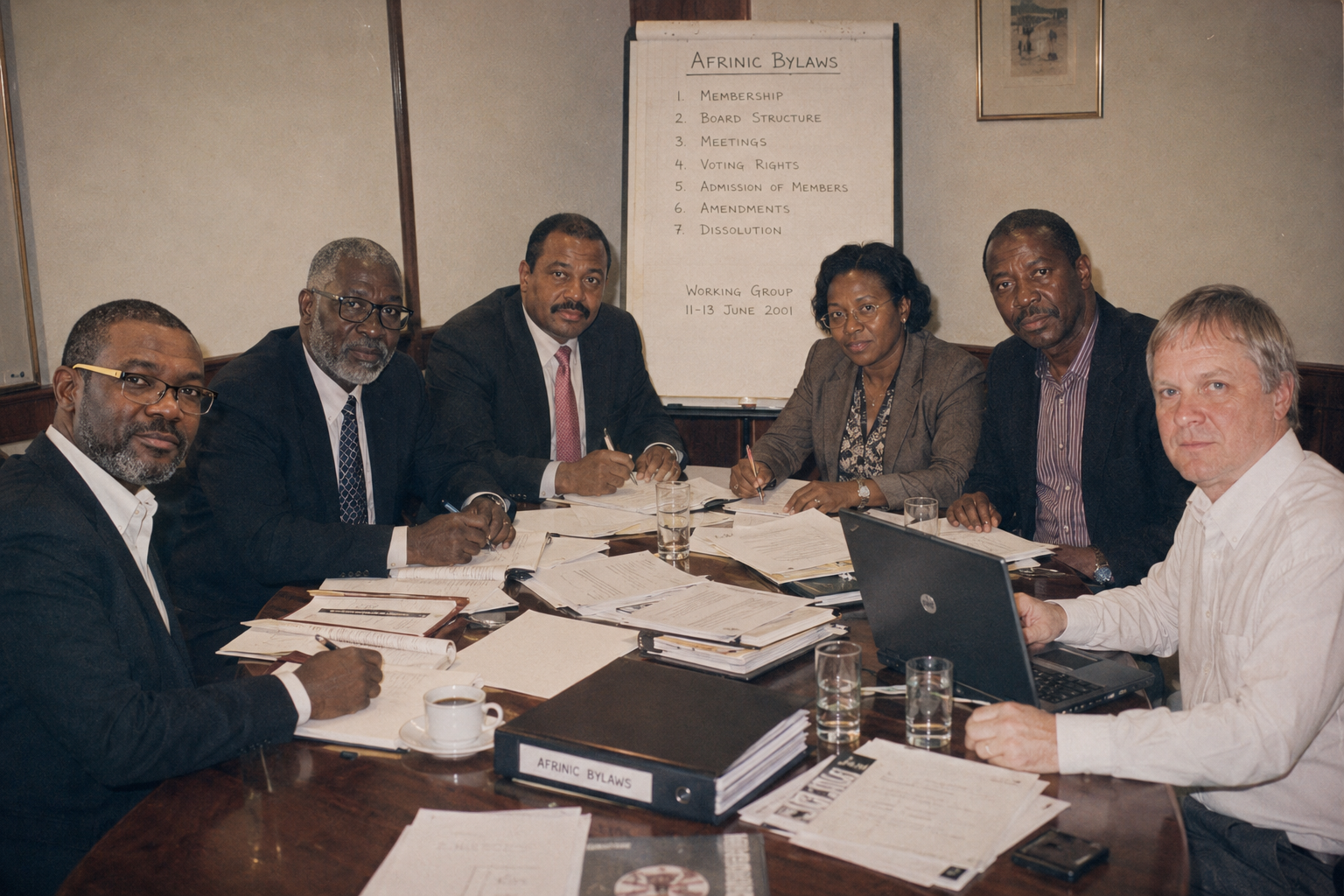
Few provisions illustrate the tension between institutional memory and modern accountability as clearly as Article 16 on the Council of Elders. The current bylaws establish a council of up to six former chairpersons with an advisory role, as set out in Article 16 of the Bylaws (Constitution) 2020. AFRINIC also maintains a dedicated Council of Elders page describing its purpose and membership. In the context of a bylaws review, such provisions often attract proposals for removal, particularly when critics associate legacy structures with past governance problems.
Any debate about the Council should begin with precision. Under the bylaws, the Council has an advisory role and no executive or fiduciary authority; it does not vote on board resolutions and it does not displace director accountability. The text is explicit that its role is advisory and consistent with terms of reference agreed with the board, a formulation introduced through a 2020 amendment, as visible in the current bylaws text. That design is not unusual in institutions that value continuity and institutional memory. The question is therefore not whether the Council is inherently illegitimate, but whether its mandate is sufficiently defined and bounded in a way that supports, rather than complicates, accountable governance.
I disagree with calls to eliminate the Council of Elders outright as a symbolic gesture of reform. In a post crisis period, the instinct to erase legacy structures can be understandable. But constitutional design should be surgical, not punitive. AFRINIC’s crisis was not caused by the existence of institutional memory; it was exacerbated by legal warfare and contested authority, as documented in AFRINIC’s March 2026 member update and earlier institutional communications. Removing an advisory body without a clear evidence base risks signalling instability, not renewal, and may deprive the board of continuity at precisely the moment when governance lessons need to be institutionalised.
A more defensible approach would be to refine mandate, transparency, and conflict of interest safeguards. AFRINIC’s bylaws already include a dedicated conflict of interest clause for directors in Article 15.5, and they empower the board to create committees with defined terms of reference. Similar clarity could be applied to the Council of Elders through published terms, transparent appointment processes, and public reporting of interactions. AFRINIC’s board meeting archives show that committees and advisory roles can be documented and disclosed. Reform should therefore improve governance clarity while preserving institutional memory, rather than treating memory as a liability.
In transitional governance periods, institutional memory can be a stabilising asset. The board and receiver’s October 2025 communiqué described the need to restart committee work and to consolidate reforms after years of disruption. A Council of Elders, properly bounded, can help protect against repeated cycles of institutional amnesia, especially in a context where turnover, litigation, and external pressure can fracture continuity. The challenge is to ensure that institutional memory serves as advice, not as shadow governance. That is a design problem, not a reason for deletion.
Seen through the lens of institutional design, the Council debate is a warning against reform driven by symbolism. The NRO’s RIR Governance Matrix reveals that RIRs vary in how they structure advisory bodies, member councils, and community oversight mechanisms. Diversity of design is not a flaw. It is an expression of regional institutional cultures. AFRINIC should therefore approach Article 16 with a calibrated question: what governance function is the Council meant to serve today, and what safeguards ensure it cannot distort accountability. That is the level of analysis that constitutional reform requires.
The 6.2 million IPv4 question: institutional integrity before constitutional revision
No constitutional review of AFRINIC can be insulated from the unresolved dispute over a large volume of IPv4 resources associated with Cloud Innovation and its principal, Lu Heng. AFRINIC’s August 2022 communique and press release on the litigation repeatedly reference the scale of the resources at issue, framing them as central to the organisation’s ability to fulfil its mandate. Independent voices within the registry system also took note. ARIN’s CEO described the dispute as a direct challenge to registry stability in his 2021 analysis. In practice, the widely cited figure of approximately 6.2 million IPv4 addresses has become an organising symbol of the crisis, precisely because IPv4 scarcity makes such quantities strategically significant.
To put that number in perspective, 6.2 million IPv4 addresses is roughly the equivalent of 95 /16 blocks or more than 24,000 /24 networks, in a resource universe where the global unallocated pool has been depleted since 2011, as recorded by IANA’s IPv4 exhaustion report and its IPv4 address space registry. AFRINIC’s own IPv4 exhaustion policy page makes clear that allocations now operate in a scarcity environment. In such conditions, a dispute over millions of addresses is not simply a legal quarrel between a registry and a member. It is a structural test of whether the registry system can prevent resource concentration and enforce policy driven stewardship in the face of market incentives.
Internet number resources do not function as property in the classical sense. They are delegated under contractual and policy frameworks that impose obligations on holders, including accuracy of registration data and compliance with community policies. AFRINIC operationalises this through instruments such as the Registration Service Agreement and through registry services described under IP resources management. Governance disputes become existential when they undermine the enforceability of these instruments. If a member can use courts to prevent enforcement actions, or to immobilise registry operations, the incentive structure shifts from policy compliance to litigation leverage.
The economic context explains why litigation and governance pressure emerged. After IPv4 exhaustion, a secondary market developed in which address blocks can be transferred between holders under RIR policies. AFRINIC’s own transfer rules have been the subject of policy proposals and amendments, including the 2020 GEN 006 draft on IPv4 transfer policy. When RIPE NCC announced that it had run out of IPv4 addresses in 2019, in its public exhaustion notice, it confirmed what operators already experienced: scarcity raises prices, and transfers become a mechanism for growth. In a region where operators face both capacity constraints and development imperatives, opaque or aggressive capture of address blocks can distort markets and undermine trust in governance.
That is why the unresolved 6.2 million issue should be treated as a prerequisite question for constitutional redesign. AFRINIC’s own public communications suggest that the dispute has consumed governance bandwidth and financial resources, and has been used to obstruct both policy implementation and institutional reform, as described in the March 2026 member update. The August 2022 press release similarly frames the litigation as a threat to AFRINIC’s ability to allocate resources according to policy. If the registry cannot enforce stewardship rules over large blocks in dispute, then rewriting the constitution without resolving the underlying enforcement environment risks producing elegant text that cannot be implemented.
It is important to keep analysis grounded in public record. AFRINIC maintains a publicly accessible list of court cases involving AFRINIC and a litigation FAQ that summarise the scale and nature of proceedings brought by Cloud Innovation and associated entities. AFRINIC has also posted specific case updates, such as its October 2021 update on the removal of a freeze order against its bank accounts. These documents provide a baseline for understanding the legal environment without relying on rumour. They also underline a core point for the bylaws review: the organisation has been forced to operate under sustained litigation pressure, and any constitutional redesign should explicitly account for that reality.
Litigation pressure had concrete governance effects. AFRINIC’s litigation FAQ notes that interim orders obtained in some cases impeded the board from operating. The institutional consequences are visible in court documents as well. The judgment in African Network Information Centre (AFRINIC) Ltd v Cloud Innovation Ltd & Anor, 2024 SCJ 473, posted by AFRINIC, discusses the legal implications of a non quorate board and representation in proceedings. Whatever one’s interpretation of these cases, the record shows that constitutional provisions on board composition, quorum, and representation can become litigated terrain. That is precisely why constitutional change should proceed from a careful diagnosis of which provisions proved vulnerable, and under what conditions.
In that light, the 6.2 million IPv4 issue is not an isolated resource dispute. It is a proxy for broader institutional questions about enforcement authority, member obligations, and the ability of a regional registry to defend its unallocated pool. AFRINIC’s March 2026 update frames the new board’s mission as ensuring that the organisation never returns to paralysis. Achieving that objective will require more than revising clauses. It will require stabilising the institutional environment in which those clauses must operate, including managing litigation risk and restoring operational continuity.
From a governance perspective, the central issue is stewardship. Under the RIR model described in ICP 2, number resources are allocated according to community policies and recorded in public registries to support routing security and uniqueness. When large blocks are alleged by the registry to be used outside the service region or contrary to policy, and when enforcement becomes trapped in litigation, the stewardship model is strained. The ongoing ICP 2 revision process reflects a broader recognition that RIR governance rules may need to be clarified to manage such stresses. AFRINIC’s bylaws review should therefore be cautious about codifying new structures before the resource stewardship dispute that triggered crisis has been brought to a stable resolution.
IPv4 scarcity, transfer markets, and governance incentives
IPv4 scarcity is the backdrop against which AFRINIC’s crisis unfolded. The depletion of the IANA pool, documented in IANA’s 2011 IPv4 exhaustion report, pushed scarcity management onto RIRs. As each region approached exhaustion, policy debates intensified around how remaining space should be allocated and how transfers should be regulated. RIPE NCC’s 2019 notice that it had run out of IPv4 addresses is one widely cited marker of this new era. AFRINIC’s own IPv4 exhaustion page makes clear that Africa is not insulated from these pressures. Scarcity turned what had once been a purely technical registry function into a market relevant governance domain.
Secondary markets emerged as operators sought to acquire IPv4 for growth and compatibility while transitioning to IPv6. RIRs responded with transfer policies that attempt to balance flexibility with accountability, often requiring needs based justification, registration accuracy, and due diligence checks. In AFRINIC, transfer policy has been the subject of ongoing debate, visible in proposals such as 2020 GEN 006 on IPv4 transfers. The technical challenge is that an address block can be routed globally regardless of where it was originally allocated, making geographic stewardship a governance rather than a physical constraint. The economic challenge is that market prices can incentivise concentration and arbitrage, especially where enforcement is uneven.
A functioning transfer regime requires reliable registry data. AFRINIC’s IP resources management page describes its role in maintaining WHOIS information not only for its members but also for legacy resource holders in the region. When registry data becomes contested, the integrity of routing and accountability can be undermined. This is why RIR systems are structured around public databases and contractual obligations, not merely market transactions. Governance disputes that weaken enforcement can therefore distort the transfer market by reducing the cost of non compliance and increasing the value of litigation as a business tool.
The intersection of scarcity economics and governance vulnerability can create incentives for institutional capture. ARIN’s 2021 analysis warned that the AFRINIC dispute threatened the stability of the registry system itself. AFRINIC’s 2022 press release framed the litigation as an attempt to prevent the organisation from enforcing policy and to immobilise allocation functions. Whether one interprets these as defensive narratives or as accurate descriptions, they highlight a structural risk: when the enforcement institution is weakened, scarcity rents accrue to those who can control large address blocks and can deter challenges through legal and procedural pressure.
These dynamics explain why bylaws provisions that may appear procedural can become strategically contested. The 2020 amendments included changes to proxies at member meetings and to board powers to appoint directors to fill vacancies, listed in the Bylaws (Constitution) 2020 introduction. In a stable environment, such provisions improve flexibility and continuity. In a contested environment, they can be framed as vulnerabilities, either because they can be used to concentrate voting power or because they can be challenged as enabling governance manipulation. A serious bylaws review must therefore test each proposed change against adversarial scenarios drawn from recent crisis experience.
While IPv6 is the long term solution to address scarcity, the transition is not instantaneous, and many networks operate in dual stack or translation environments where IPv4 remains necessary for interoperability. AFRINIC’s membership and resource summary page provides a reminder that AFRINIC’s pool includes resources historically reserved for Africa by other RIRs prior to AFRINIC’s recognition. That historical context matters because it underscores that Africa’s access to number resources has always been mediated through global governance arrangements. In a scarcity era, the concentration or loss of African held IPv4 blocks has direct consequences for market access and transition costs for African operators.
From a policy standpoint, the priority should be to restore stewardship clarity over contested IPv4 resources and to ensure that enforcement mechanisms are credible, predictable, and legally resilient. AFRINIC’s March 2026 update describes work to resume IP allocations approved by the receiver and to finalise governance stabilisation. Constitutional revision that does not directly address how AFRINIC can protect its unallocated pool, enforce its service agreement, and manage transfers transparently risks becoming cosmetic. In a scarcity market, cosmetic governance is not neutral. It is an invitation to renewed capture attempts.
The governance implications extend beyond AFRINIC. The RIR community has periodically debated its institutional relationship with ICANN, including through processes such as the Address Supporting Organization review, which LACNIC summarises in its ASO Review background, and through discussions documented by RIPE NCC in its 2018 ‘future path’ article. These debates reveal a core truth of Internet governance: specialised technical institutions are embedded in broader political environments, and legitimacy is continuously negotiated. A crisis in one RIR, particularly one linked to scarcity markets and lawfare, feeds into these global debates and can reshape perceptions of the multistakeholder model’s resilience.
ICP 2 revision and the global stakes of AFRINIC’s stability
AFRINIC’s bylaws review is occurring at the same time as the global registry community is revisiting the framework for recognising and, if necessary, derecognising RIRs. In 2025 and 2026, the RIRs and ICANN advanced a draft RIR Governance Document intended to supersede ICP 2 and to clarify operating obligations and recognition criteria. RIPE NCC publicly noted this process in its announcement about the draft governance document, and LACNIC similarly opened a public consultation on ICP 2 revision. ICANN placed the second draft into a public comment proceeding. These parallel processes mean that AFRINIC’s constitutional choices are being made under evolving global expectations about RIR governance.
The draft governance document is not merely procedural. It articulates criteria for recognition, maintenance, and derecognition of RIRs, and it defines operating obligations related to registry accuracy, service continuity, and accountability mechanisms. These elements are set out in the PDF version titled ‘Governance Document for the Recognition, Maintenance, and Derecognition of Regional Internet Registries’. For Africa, the relevance is obvious. If global criteria for RIR maintenance become more explicit, then constitutional vulnerabilities at AFRINIC could be interpreted through a new governance lens. That does not mean AFRINIC is at risk of derecognition, but it does mean that the global system is adapting precisely because crises like AFRINIC’s revealed ambiguous edges in institutional accountability.
This creates a practical dilemma for the 2026 bylaws review. If the global governance framework is still under revision, how should AFRINIC interpret “best practice” and “long term organisational needs” in its own constitution. One approach is to treat the draft governance document and ICP 2 revision process as a directional signal and to ensure that AFRINIC’s bylaws are compatible with emerging expectations around accountability and resilience. Another approach is to avoid over fitting to a draft text and instead to focus on internal stabilisation while contributing to global consultations. In either case, rushing constitutional change before the global framework stabilises risks forcing AFRINIC into repeated revisions, which can further erode institutional confidence.
The global registry system has always relied on distributed trust rather than central enforcement. That is why the AFRINIC crisis drew such unusual attention. ARIN’s CEO framed it as a system wide stability issue in his 2021 analysis. ICANN’s update on receivership acknowledged court intervention without attempting to manage it. The NRO’s statement on elections treated AFRINIC’s governance restoration as a matter of shared interest across all RIRs. These documents collectively show that the multistakeholder model can be resilient, but only if each node maintains credible governance. Constitutional change at AFRINIC therefore carries implications for global confidence in the registry model.
AFRINIC’s stability is also linked to Africa’s voice in global Internet governance. The NRO describes the RIR system as a mechanism through which regional Internet communities participate in global coordination matters, as outlined on its Regional Internet Registries overview page. When AFRINIC is paralysed, Africa’s ability to influence global number resource policy and accountability debates is weakened, regardless of the quality of individual African participation in other forums. Conversely, when AFRINIC is stable, African operators and policymakers have a credible institutional platform through which to negotiate global norms. That is another reason constitutional change must be anchored in long term legitimacy rather than in short term crisis management.
The registry system’s legitimacy also rests on clear accountability relationships. The NRO’s RIR Accountability Q&A explains that RIRs are accountable to their regional communities through membership structures, policy development processes, and independent review mechanisms. AFRINIC’s bylaws define the constitutional basis for these accountability mechanisms. If bylaws are revised without broad legitimacy, accountability is weakened rather than strengthened. This is not a theoretical concern. During crisis, actors can claim to represent “members” or “the community” while pursuing narrow interests. A constitution that is not clearly grounded in inclusive consent becomes a tool for narrative and legal contestation.
Why we must not jump the gun: principles for a credible 2026 review
The phrase “do not jump the gun” is often used casually. In the context of AFRINIC’s constitutional review, it describes a real institutional risk: moving from crisis to redesign without completing stabilisation and diagnosis. The BRC’s Terms of Reference appropriately position the committee as advisory and non decision making. That design can protect legitimacy by ensuring that the final authority remains with members and the board. But advisory processes still depend on how questions are framed, how evidence is presented, and how time is allocated. A credible review therefore requires explicit principles that discipline the process and protect it from both urgency narratives and strategic manipulation.
First, constitutional change should be anchored in a public diagnosis. AFRINIC has already provided narrative elements through its March 2026 member update, its litigation FAQ, and its court case list. What is still missing is a consolidated governance assessment that maps which bylaws provisions were contested, which procedures failed under stress, and which internal controls proved inadequate. Such a document would allow the community to evaluate proposals against observed failure modes rather than against abstract claims. It would also protect the BRC from being forced to arbitrate contested narratives without an evidentiary baseline.
Second, proposed amendments should be accompanied by a legal and policy mapping. Where a change is required by Mauritian law, the relevant statutory clause should be cited and the compliance rationale explained. Where a change is based on “best practice”, the comparator should be referenced, for example through the NRO’s RIR Governance Matrix. AFRINIC has done this in part before by publishing structured diff tables, including the 2020 table of bylaws changes. Repeating and improving that practice in 2026 would reduce information asymmetry and strengthen the defensibility of the final text.
Third, the review should be sequenced with institutional milestones. A constitution is implemented by an organisation with leadership, staff, and operational systems. AFRINIC’s board has identified CEO recruitment and operational stabilisation as priorities in the March 2026 update. It is therefore prudent to avoid locking in constitutional commitments that presume a future operational model before executive leadership is in place and before the first full Members General Meeting under the new board can deliberate on strategic direction. Aligning constitutional reform with these milestones would reduce the risk that bylaws become an aspirational document detached from institutional capacity.
Fourth, AFRINIC should explicitly design for continental inclusiveness. Participation in bylaws consultations has historically been uneven, as AFRINIC noted in its 2019 call for comments, and election dynamics can create periods of intense mobilisation by some actors, as seen in the 2025 cycle described in the notice to members. The 2026 process, announced on the announce mailing list, should therefore invest in regional outreach, multilingual materials, and sufficient time for smaller operators to coordinate. Inclusiveness is not only normative. It is strategic. A constitution perceived as regionally captured will become a source of continuing contestation.
Fifth, constitutional reform must not become a substitute for resource accountability. The dispute described in AFRINIC’s 2022 litigation press release and in the 2026 member update remains a central structural issue. It involves not only a large volume of IPv4 resources but also the use of litigation to obstruct governance processes. Any bylaws review that does not address how AFRINIC can enforce its service agreement, protect unallocated resources, and manage disputes without institutional paralysis risks repeating the crisis under a different constitutional form. Stewardship integrity must be treated as the foundational problem that constitutional design is meant to support.
Sixth, AFRINIC’s review should engage with the global ICP 2 revision process rather than operate in parallel silence. The RIR Governance Document version 2 and ICANN’s public comment proceeding show that the global framework for RIR recognition and accountability is evolving. AFRINIC’s constitutional settlement should therefore be compatible with emerging global expectations, while preserving regional autonomy and the multistakeholder model. Doing this well requires time and expertise. Rushing constitutional drafting risks producing inconsistencies that could later be exploited by litigants or used in global debates to question regional governance capacity.
These principles explain my restraint on drafting commentary. I will not add to the line by line constitutional drafting process during the current consultation window. But I do encourage AFRINIC resource members to treat the 2026 consultation as an opportunity to insist on diagnostic transparency, inclusive process design, and sequencing discipline. Constitutional legitimacy is not produced by speed. It is produced by deliberate consent anchored in evidence and in continental interest.
Pan African responsibility in a contested digital order
African digital sovereignty is increasingly articulated in continental policy frameworks, including the African Union’s Digital Transformation Strategy for Africa 2020 to 2030, which emphasises continental ownership of digital infrastructure and governance tools. AFRINIC is not mentioned as frequently in political documents as fibre cables or data centres, yet it is foundational. Without predictable access to number resources and a credible registry, the continent’s ambitions for a secure digital single market and interoperable connectivity infrastructure are undermined. The bylaws review is therefore not a technical sidebar. It is part of the institutional scaffolding of Africa’s digital development agenda.
This matters in a global environment where digital infrastructure and standards are increasingly treated as strategic assets. Competition over supply chains, cloud platforms, undersea cables, and data governance is well documented, and governance of IP number resources is a quieter but equally consequential layer of this contest. AFRINIC’s crisis was already interpreted through a sovereignty lens by political actors such as Smart Africa in its July 2025 statement. At the same time, the global registry community’s move to revise ICP 2 through the draft RIR Governance Document signals a recognition that institutional resilience is now a strategic concern. Africa’s stewardship of AFRINIC is therefore part of a wider struggle over the integrity of multistakeholder governance and the distribution of digital power.
At a minimum, one principle should remain non negotiable. AFRINIC belongs to the African and Indian Ocean Internet community, not to any single actor, company, or region. That is implicit in the RIR model described by the NRO in its overview of the Regional Internet Registries, and it is reflected in AFRINIC’s own history of constitutional adoption and member driven policy development. The 2026 bylaws review should therefore be a process that consolidates collective ownership. If it is rushed, poorly documented, or perceived as captured, it will not resolve crisis. It will extend it by constitutional means.
Reform is necessary. But speed is not legitimacy, and urgency is not strategy. AFRINIC’s constitutional architecture must be rebuilt with the same deliberative discipline that characterised previous amendments, documented in the 2018 to 2020 consultation record and in the AGMM 2020 minutes. Stabilisation and diagnosis should precede redesign. Stewardship integrity over contested resources should be addressed before constitutional engineering. And inclusiveness across the continent should be treated as a strategic requirement. This is why I will not comment on the drafting details of the new bylaws at this stage, and why I urge the community to insist on a process that privileges legitimacy over haste.
A documented chronology of AFRINIC’s constitutional and governance milestones (2004–2026)
The chronology below is not exhaustive, but it is designed to anchor discussion of the 2026 bylaws review in publicly verifiable milestones. Each entry links to primary sources where available, including AFRINIC’s Corporate Documents archive, official communiqués, meeting minutes, and institutional statements by ICANN and the NRO. The purpose is to provide a shared factual baseline for readers and members who want to assess whether the current constitutional review is appropriately sequenced and sufficiently grounded in institutional memory.
2004: Foundational institutional design
AFRINIC’s early institutional phase tied policy development to constitutional architecture. The NRO’s July 2004 progress report notes that AFRINIC adopted a new article to its constitution and proceeded with board elections. AFRINIC’s factsheet on AfriNIC 1 in Dakar, May 2004 situates constitutional adoption within the first policy meeting cycle. These records demonstrate that AFRINIC’s legitimacy has always been built through documented processes rather than informal arrangements.
2007–2016: Iterative constitutional revision
AFRINIC’s bylaws evolved through multiple versions prior to the current 2020 constitution. The archived 2007 bylaws PDF provides one of the earliest consolidated texts available in the public archive. Subsequent revisions are visible in the 2012 bylaws version and the December 2016 bylaws PDF. Together, these documents illustrate gradual adaptation of governance structures as AFRINIC matured, including refinements to membership classes, board roles, and procedural mechanisms.
2018–2020: A documented cycle of deliberate reform
AFRINIC initiated a major consultation cycle through community calls for input, including the November 2018 mailing list call for comments and the January 2019 call for comments that noted low participation and extended deadlines. In 2020, AFRINIC consolidated proposals through a bylaws changes review page and the table of proposed changes, culminating in the AGMM 2020 special resolutions process. The draft minutes provide an unusually detailed record of which amendments passed and failed, making this cycle an important reference point for the legitimacy expectations of any future bylaws review.
2021–2022: Litigation escalation and early institutional warnings
By 2021, litigation began to intrude into operational continuity. AFRINIC published an October 2021 update stating that a freezing order against its bank accounts had been declared null and void. The governance committee continued to communicate about bylaws and governance matters, including through the May 2021 communique that linked back to the consolidated bylaws text. In 2022, AFRINIC posted specific case updates such as its February 2022 court update in Cloud Innovation Ltd v AFRINIC (SCR 5C/30/21), and later issued a communique and press release framing the litigation as a systemic threat to the registry’s function.
2023–2025: Receivership, election annulment, and reconstitution of the board
In September 2023, ICANN issued an update acknowledging the appointment of an official receiver, and the NRO issued a statement on the appointment. In March 2025, ICANN published another update on the receiver appointment reflecting continued court involvement. In July 2025, AFRINIC announced that the receiver had annulled the June election due to suspected irregularities in its notice to members, issued an advisory on third party communications, and faced a winding up petition. ICANN’s June and July 2025 letters to the receiver demonstrate external attention to these processes. AFRINIC later announced the September 2025 election results, and the NRO issued a statement on the elections. The board and receiver set out post election priorities in their October 2025 communiqué.
2025–2026: Global ICP 2 revision and the re emergence of constitutional debate
In parallel with AFRINIC’s governance restoration, the global registry community reopened debate on the framework for recognising and derecognising RIRs. RIPE NCC announced the publication of a draft governance document intended to update ICP 2 in its news item, and ICANN opened a public comment proceeding. LACNIC similarly hosted a public consultation on ICP 2. These developments place additional weight on AFRINIC’s internal governance choices, because they signal that the global system is formalising expectations of resilience. In 2026, AFRINIC published a member update on organisational stability, called for volunteers through a BRC call, issued an appointment notice, and opened a community consultation for bylaws review.
Key public documents for members engaging the 2026 bylaws review
The documents below are among the most relevant for members seeking to engage the bylaws review with an informed understanding of process, history, and institutional context. They are not presented as an exhaustive bibliography. They are listed because they define the procedural rules of the review, record prior constitutional reforms, and describe the legal and governance environment in which the current process is unfolding. Each document is linked where it is referenced, and members should cross check these sources through AFRINIC’s Corporate Documents archive where possible.
The procedural starting point is the Community Consultation on the Review of Bylaws, which sets out the submission window, the mechanism for sending proposals, and the scope of the review. Its authority is reinforced by the BRC Terms of Reference, which define committee composition, deliverables, and reporting lines. Members should treat these as the baseline for assessing whether the process is being followed and whether deadlines are reasonable.
For institutional memory, the Bylaws (Constitution) 2020 provides the current consolidated text, while the archived 2016 bylaws PDF and earlier versions in the Corporate Documents archive allow members to track changes over time. The 2018 to 2020 consultation record is anchored by AFRINIC’s bylaws changes review page and the table of proposed changes, which remain useful models for transparent constitutional deliberation.
For the crisis context, AFRINIC’s March 2026 member update is the most comprehensive official narrative of current legal challenges and governance priorities. The court case list and litigation FAQ provide structured summaries of proceedings. For earlier escalation, the August 2022 communique and associated litigation press release PDF set out AFRINIC’s account of the dispute with Cloud Innovation and the stakes it identified for registry function.
Members seeking to understand how the crisis was perceived beyond the region should consult ICANN’s September 2023 update on the receiver and its March 2025 update on receiver appointment, alongside the NRO’s statement on the appointment of an official receiver and its statement on the 2025 board elections. These documents provide insight into the systemic stakes attached to AFRINIC’s stability and into the expectations that other institutions place on AFRINIC’s governance restoration.
Finally, to situate AFRINIC’s constitutional review within the global governance debate, members can consult the RIR Governance Document version 2, ICANN’s public comment page for the second draft, RIPE NCC’s announcement of the draft, and LACNIC’s consultation page. These sources show that the global registry system is itself revisiting how institutional resilience and accountability should be specified. AFRINIC’s bylaws review should therefore be understood as part of a broader negotiation about the future of the RIR model.