
English translation of the French article first published on 25 January 2026. Read the original
In Libreville, a national workshop on Internet governance and digital sovereignty turned a frequently fragmented debate into a practical roadmap. It also marked a new phase for AfroDIG, with further work planned in several African countries.
From strategic debate to a national roadmap
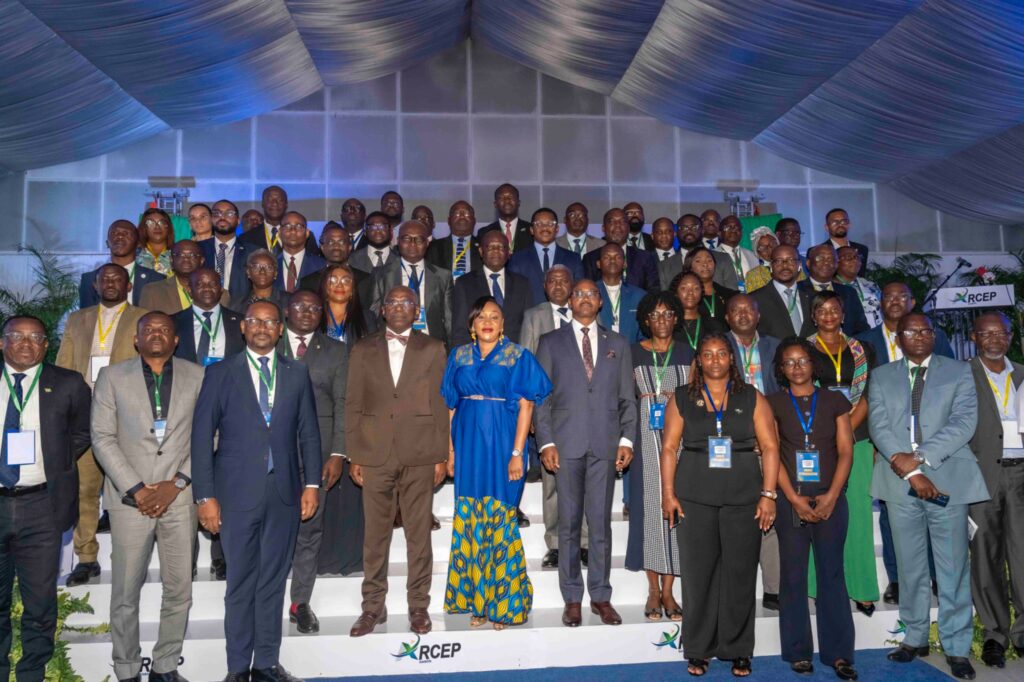
On 22 and 23 January 2026, Libreville hosted a national workshop on Internet governance and digital sovereignty. Bringing together 65 participants from government, the regulator, the private sector, the technical community, academia and civil society, the meeting had a specific purpose. It sought to build a shared understanding of the issues and initiate action around 3 closely connected pillars, the Internet, data and artificial intelligence.
One of the report’s main contributions is to clarify a frequently misunderstood concept. It presents digital sovereignty as the strategic capacity to understand, shape and secure the choices that structure a national digital ecosystem. This requires a sound grasp of how the Internet works, a reduction in excessive dependencies, the protection of data and a presence in the forums where technical and political decisions affecting African countries are made.
The report rightly stresses an issue that public debate often overlooks. Credible digital sovereignty requires attention to critical Internet resources. The country code top-level domain, IP addressing, IPv6, the DNS, routing and interconnection form the foundations of digital resilience. International connectivity is another decisive consideration. Better mapping of submarine cables, available capacity, existing redundancy and potential vulnerabilities can improve service continuity, reduce costs and strengthen overall performance.
The document also connects these technical questions with broader issues of data governance, trusted cloud services and artificial intelligence. It proposes a data governance framework based on classification, responsibility, protection and auditability. Its approach to AI is cautious and practical, grounded in transparency, security, accountability and impact assessment. These principles would then be tested through 2 to 3 supervised pilot projects.
This move from reflection to implementation is what gives the report particular significance. Beyond its findings, it sets out a priority action plan, a monitoring mechanism and milestones for the short, medium and longer term. For the first 100 days, it recommends establishing a national committee and a technical secretariat, conducting a rapid assessment of critical resources and mapping international connectivity. Within 6 months, it calls for the adoption of a national data governance framework and an initial AI framework. Participants’ evaluation, with an average score of 7.7 out of 10, suggests that there is demand for this work and that momentum is building. Follow-up support will nevertheless be essential to translate the workshop’s outcomes into decisions and measurable results.
An AfroDIG initiative with a wider reach
The strategic guidance note prepared for the regulator opens an important perspective for Gabon and beyond. It affirms the regulator’s central role in Internet governance, oversight of critical resources, cyberspace regulation and the governance of emerging technologies. It also encourages Gabon to strengthen its participation in regional and international forums, including ICANN’s Governmental Advisory Committee, and to position itself as a regional hub for high-level dialogue on digital regulation.
For AfroDIG, this work marks a foundational step. It was the organisation’s first intervention of this kind, delivered through its lead consultant, Emmanuel Vitus. The experience in Gabon confirms the value of support rooted in each country’s institutional, technical and political circumstances, while retaining an African perspective on Internet governance, digital sovereignty and AI governance.
The work begun in Libreville is intended to continue in Niger, Chad and other countries, with the same emphasis on strategic clarity, national coordination and practical implementation. As African states seek to defend their digital interests more effectively, this approach can help develop stronger national frameworks, more coherent regional coalitions and a more influential African presence in global debates.
The lesson from Gabon is straightforward. Africa will strengthen its digital sovereignty by investing in an understanding of Internet governance, in the ability to manage infrastructure and data, in responsible AI regulation and in collective action. Libreville thus emerges as the starting point for a wider effort that AfroDIG intends to support over the long term.