

Investigation 1/5
Cloud Innovation holds 6,291,456 addresses allocated by Africa’s Internet registry and is seeking its liquidation. A company controlled by Lu Heng is pursuing 10 domain extensions. The OutsideHeaven entry in the Pandora Papers connects his business history to offshore structures. At stake is the power to set the rules for essential Internet resources.

In July 2025, Cloud Innovation called for the liquidation of AFRINIC, the African registry that had allocated it 6,291,456 Internet addresses. The Seychelles company argued that AFRINIC’s governance had broken down and that a transition to new custodianship could protect the networks relying on it. Its winding-up petition appears in AFRINIC’s case register under the date 9 July 2025.
Behind the company is Lu Heng, the entrepreneur who signed its original registration agreement and now directs the commercial coordination of its address business, according to AFRINIC’s correspondence and a company-published operating mandate. Another company under his declared control, Innovation Service Limited, operates the domain extension .help and is seeking to expand its registry portfolio.
The disputes concern more than the fortunes of these businesses. AFRINIC, a not-for-profit company incorporated in Mauritius, manages number resources for Africa and the Indian Ocean. In 2021, a court-ordered attachment of its funds left it unable to meet financial commitments for nearly 3 months. The possibility of liquidation now raises questions about who would maintain the registry and exercise its authority afterward.
Lu’s businesses are simultaneously challenging the authority of a number registry and seeking a larger role as a domain registry operator. Their contracts and policies place him at the intersection of both systems. His dispute with AFRINIC concerns the conditions attached to allocated addresses, the right to challenge a registry’s decisions and the limits of commercial control over resources on which other networks depend.
Cloud Innovation, LARUS and the separation of contractual and commercial control
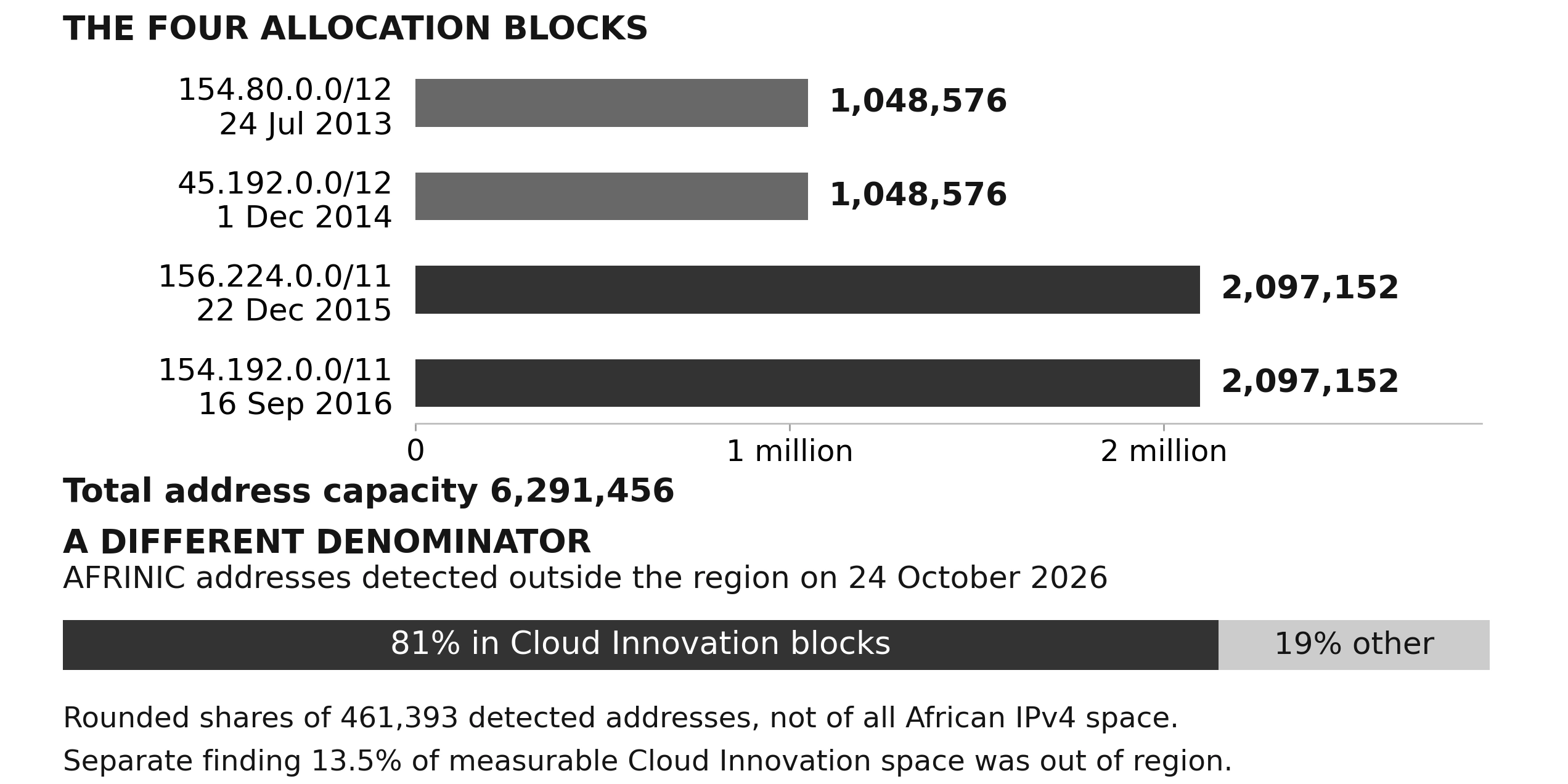
Cloud Innovation received 4 IPv4 allocations between 2013 and 2016. Their combined capacity is 6,291,456 addresses. IPv4 is the older Internet addressing system, whose central allocation pool ran out in February 2011. Its limited supply has sustained commercial demand even as networks adopt the much larger IPv6 system.
Cloud Innovation is registered in Seychelles under company number 128670. AFRINIC identifies Lu as the signatory to its registration services agreement of 23 July 2013. The company describes itself as retaining the registry relationship and authorization functions while Hong Kong-based LARUS handles commercial, operational and technical services.
LARUS was incorporated in Hong Kong as Larus Cloud Service Limited on 8 July 2016, under company number 2401022. It changed its name to Larus Limited on 14 September 2020. Its billing information identifies the same legal entity and registration number.
Under the operating mandate published by LARUS, Cloud Innovation appoints it as the exclusive customer-facing platform for the covered resources. Lu is named as the strategic and commercial coordination lead across both companies, responsible for commercial direction, operational coordination and alignment. The published copy is undated and has no signature block.
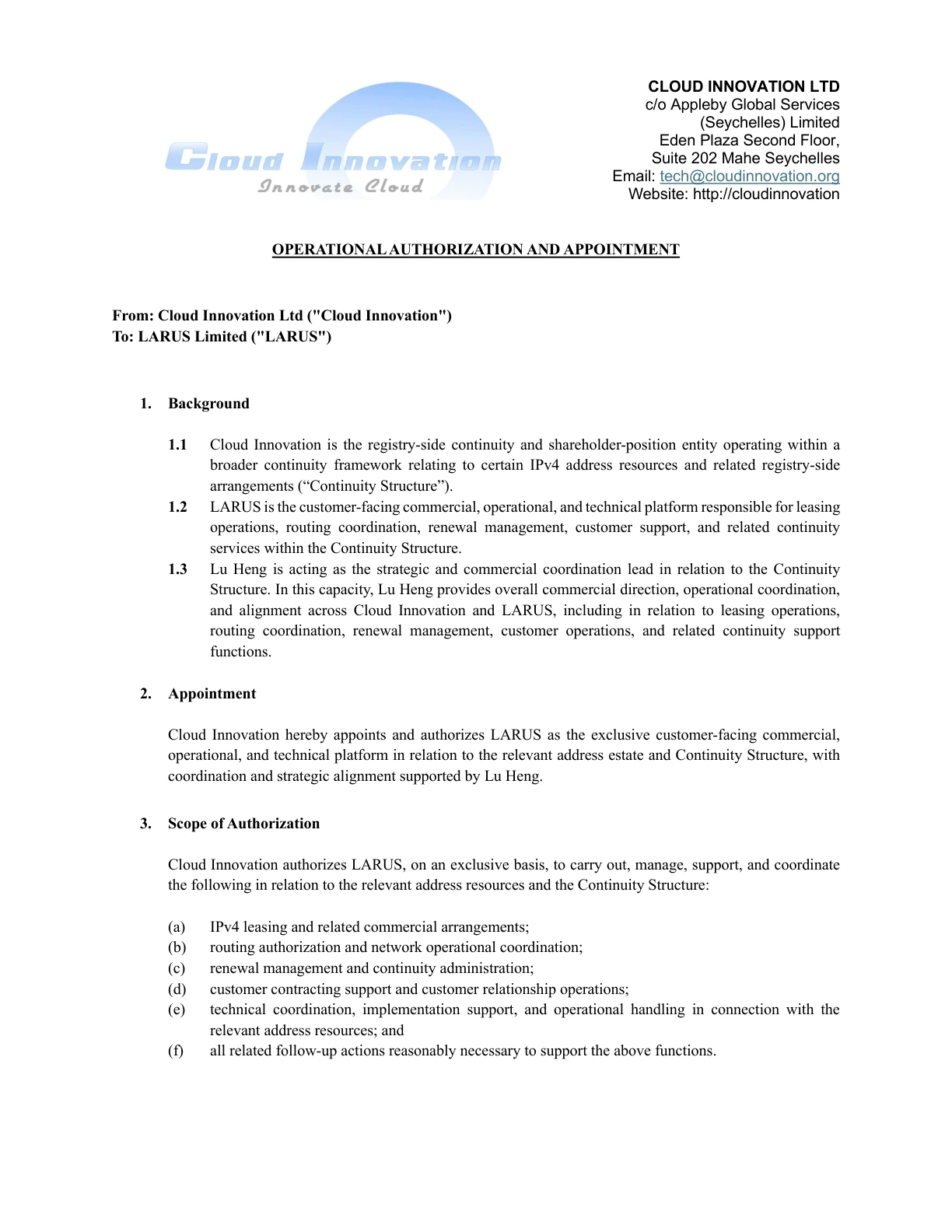
This arrangement separates the registry contract from the commercial operation. Cloud Innovation holds the registration relationship; LARUS handles services including leasing and customer support. Their published description of the arrangement does not disclose the full distribution of equity or the terms of payments between the companies.
Lu’s control of Innovation Service is more explicitly disclosed. In its application for .faq, the Seychelles company names Heng Lu as director, officer or partner, material shareholder, person with executive responsibility and ultimate controller. ICANN’s application rules define a material shareholder as holding at least 15% of shares or other equity. The public disclosure gives no exact percentage.
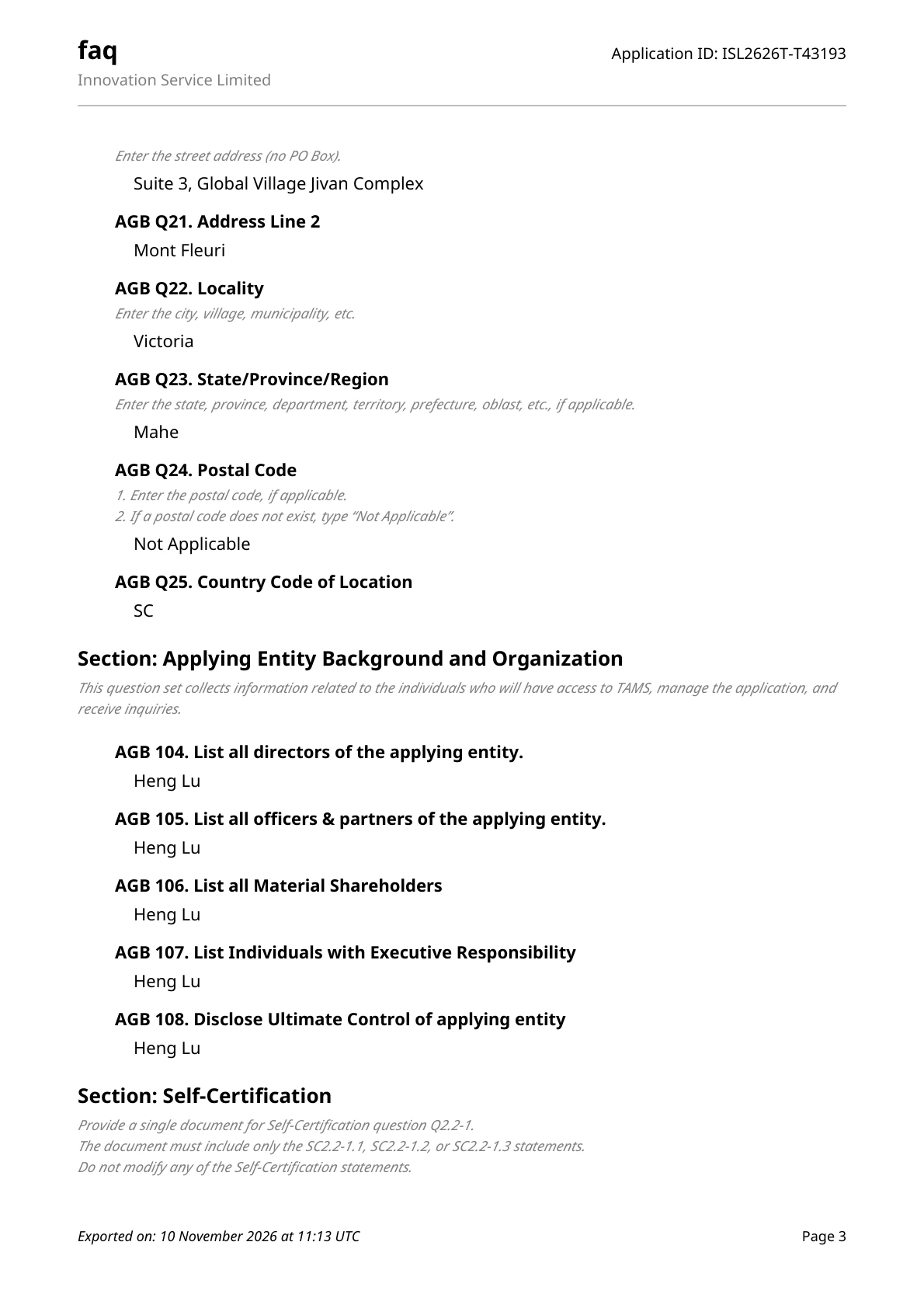
The published arrangements identify Lu’s operating authority more clearly than the companies’ full share ownership. In Hong Kong, significant-controller information is kept by qualifying companies, rather than filed in the public incorporation notice. Seychelles also requires beneficial-ownership records. Registered ownership, beneficial ownership and managerial authority are separate parts of this corporate structure.
Reported ultimate beneficial owner
OutsideHeaven Ltd
British Virgin Islands · incorporated 28 May 2013
Signatory to the 2013 agreement
Cloud Innovation
Seychelles · no. 128670
Holder of the AFRINIC registration relationship; full share ownership not established.
Exclusive commercial operating mandate
LARUS Limited
Hong Kong · no. 2401022
Declared material shareholding and ultimate control
Innovation Service
Seychelles · no. 193273
OutsideHeaven and Lu Heng’s connection to the Pandora Papers
The Panama Papers, published in 2016, were followed by the Pandora Papers in 2021, a separate leak from offshore service providers. OutsideHeaven’s ICIJ entry comes from the latter.
Lu was participating in Internet governance before LARUS existed. At RIPE 61 in 2010, he appeared under the OutsideHeaven name with a Netherlands affiliation. That November, he questioned which courts’ orders bound RIPE NCC, the regional registry serving Europe, the Middle East and parts of Central Asia.
In 2012, he stood for the RIPE Programme Committee, describing himself as CEO of Hang Zhou Outside Heaven Network Technology co., ltd., a Netherlands-based Internet service provider. His candidate biography promoted tailored connectivity services for Chinese customers. Jan Žorž won the election.
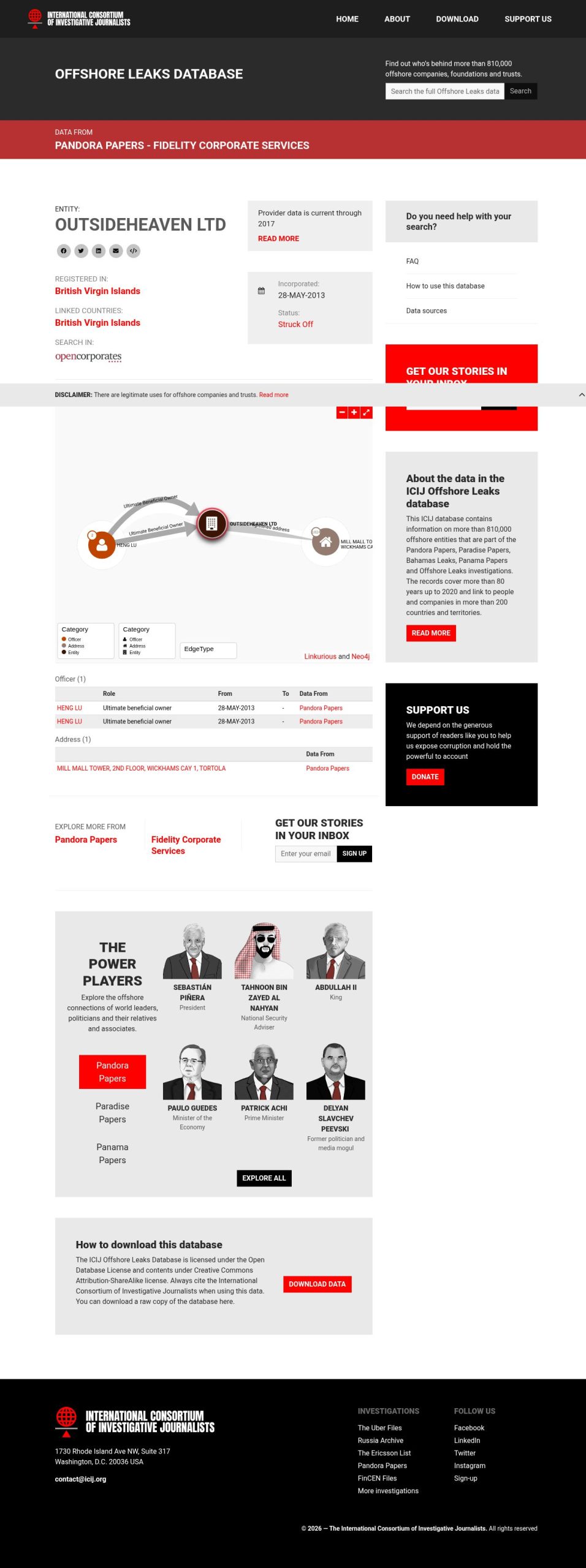
A British Virgin Islands company called OutsideHeaven Ltd was incorporated on 28 May 2013, according to ICIJ’s Offshore Leaks Database. Its linked HENG LU entry names an ultimate beneficial owner from that date. The information comes from Fidelity Corporate Services records in the Pandora Papers, not the Panama Papers, and reflects historical provider data through 2017.
Journalists from Forbidden Stories have confirmed to the author of this investigation that the HENG LU identified in this entry is the entrepreneur Lu Heng. That identification is separate from the legal continuity between OutsideHeaven Ltd in the British Virgin Islands and the earlier OutsideHeaven business, which still requires matching corporate identifiers. Appearance in the Pandora Papers does not, by itself, establish a tax offense.
The OutsideHeaven name also featured in an earlier allocation dispute. ARIN, the North American regional registry, said in 2021 that Lu had sought more than 1 million addresses through Outside Heaven Ltd in 2013. Its chief executive, John Curran, said ARIN rejected the request after unanswered requests for information and described the supplied information as misleading and inconsistent.
Lu disputed that account in NANOG correspondence. He said the company abandoned the request because ARIN sought customers’ personal information, including street addresses, which it did not collect. Curran maintained that the registry had denied the application. No allocation resulted from the request. The parties offered conflicting explanations for the failed application, years before their later public exchanges about AFRINIC.
RIPE NCC, APNIC and a long argument over registry powers
Lu is LARUS’s founder and chief executive. He says he studied International Economics and Business at the University of Groningen during 2008–2012. His public career has combined the address business with repeated efforts to influence the institutions governing it. The claimed studies do not independently establish a degree. His documented RIPE interventions begin in 2010; activity dating to 2009 remains to be established.
In May 2011, he suggested that unused IPv4 addresses be returned to RIPE NCC rather than traded. In February 2012, he proposed contributions linked to members’ address holdings. His reply the following day opposed turning the registry into a police force. The tension between resource stewardship and limits on registry enforcement preceded the AFRINIC litigation by years.
By November 2013, Lu was defending confidential allocation justifications and expressing confidence in RIPE NCC. In 2015, he questioned what should happen when the operational need behind an allocation changed. RIPE NCC’s response in the exchange emphasized accurate data and assessment against the facts of each case.
He also contributed to technical discussions, including a 2016 presentation on routing-object security and 2018 exchanges about cross-registry routing. In 2017 AFRINIC correspondence, he argued that Africa could move directly toward IPv6 and maintained that a registry could not take an asset without court backing. His 2019 opposition to enforcement overreach continued the same argument for a restricted registry mandate.
Lu also pursued institutional roles. He ran unsuccessfully for APNIC’s Executive Council in 2022 and 2023. The Pacific Telecommunications Council listed him as a continuing Advisory Council member in 2022 and as outgoing for the January 2025 transition. That was service on its Advisory Council, a separate body from its Board of Governors.
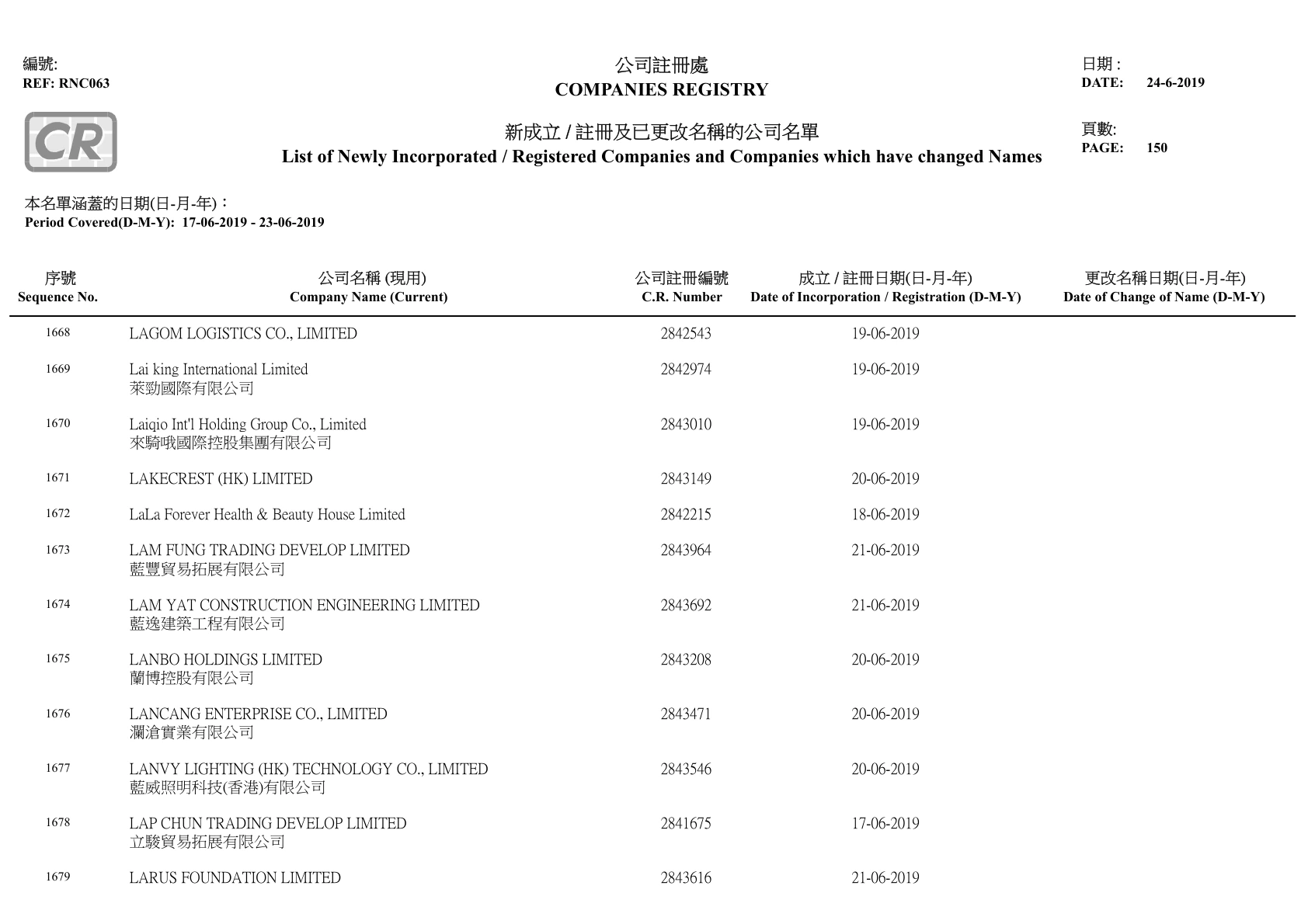
LARUS Foundation Limited was incorporated in Hong Kong on 21 June 2019, under company number 2843616. Its charitable tax exemption took effect on 10 August 2020. Lu’s personal timeline dates the Foundation to 2018, while the company timeline uses 2019, the year of legal incorporation.
Within RIPE, Lu has participated in the open technical community, which is distinct from RIPE NCC, the registry’s membership association. In 2025, RIPE NCC’s Executive Board selected him for its election Code of Conduct Team, a volunteer body evaluating reports about candidate conduct in that May’s Board election. The appointment was to the conduct team, rather than the Executive Board. Community participation, company membership and this formal volunteer appointment are separate relationships. These records do not establish employment by RIPE NCC or authority to speak on its behalf.
That same month, he challenged RIPE NCC at its General Meeting over legal costs, rejected sponsorship and the ability of resource holders to change registries. He denied threatening anyone and argued that recognition of members’ rights would resolve the competition problem he described. RIPE NCC’s chief legal officer disputed his premises and said the organization was not obliged to accept every sponsorship offer.
RIPE NCC chief executive Hans Petter Holen called the intervention an unfounded legal threat linked to demands for changes in the registry system. Lu replied that members lacked adequate rights to their registrations and promised a legal review. Their disagreement concerned both commercial access to institutional platforms and the legal powers of the registries themselves.
NRS and the effort to turn advocacy into institutional power
The Number Resource Society, or NRS, campaigns for stronger rights for address holders and a more limited role for regional registries. It identifies Paul Wollner as president and gives a contact address in Casablanca, Morocco. A contact address does not establish a jurisdiction of incorporation. AFRINIC, in a December 2025 statement, described NRS as an unincorporated organization and said it was neither an AFRINIC member nor an authorized investigator of its election. That is AFRINIC’s characterization; a certified registration record and governing constitution would be needed to settle NRS’s precise legal status.
Its charter advances a coherent commercial position. Regional registries should keep registration records rather than exercise broad control over address use, and number resources should circulate in an open market. NRS presents those principles as protections against institutional overreach. For AFRINIC, the resulting policy question is whether its contractual conditions retain force when an allocation’s business model changes.
The membership offer combines free participation for individuals and networks with paid contributor arrangements carrying eligibility to stand for its Board and Advisory Council. That describes an offered route into NRS leadership, rather than proof of how its governing bodies are currently constituted. Its public fees do not establish actual receipts, donor concentration or expenditure.
Lu makes the association explicit. His presentation of NRS places it in a portfolio alongside LARUS’s commercial services, the LARUS Foundation and BTW.Media. His description of those initiatives assigns different functions to business operations, rule reform, public explanation and training. This is evidence of a publicly articulated division of roles, rather than a relationship inferred merely from a shared address or attendance at the same meeting.
LARUS’s support also predates that presentation. In comments reported by The Register in February 2023, Lu said LARUS was an NRS member and supported its work. The statement does not quantify the support. It cannot establish NRS’s total funding, whether staff or premises are shared, or the terms of any payments. A complete account would require donor disclosures, accounts and the contracts linking the organizations.
NRS describes a concrete means of exercising influence. Its power-of-attorney explanation says members’ mandates support collective action in elections, policy discussions and institutional reform. Where an election requires a separate proxy or voting instruction, it says that additional step is completed. It also says the mandate transfers neither the company nor its assets and should specify scope, duration, withdrawal and instructions.
AFRINIC warned members in July 2025 about third-party approaches seeking powers of attorney, specifically identifying NRS. It said there was no affiliation or endorsement and urged members to understand the authority they were granting, while acknowledging their freedom to engage outside organizations. NRS’s published representation directory is its own account of mandates, rather than independent confirmation that every named organization has granted a currently valid authority.
Representation by mandate is not inherently improper. Its institutional effect depends on how much decision-making authority is aggregated, whether principals understand and can withdraw their instructions, and whether the applicable election rules are respected. The documented mechanism deserves scrutiny because a coordinated intermediary can speak through several members while remaining distinct from each of them. It does not, by itself, establish vote buying, unlawful control of an election or a criminal enterprise.
AFRINIC and Cloud Innovation disagree over the conditions of allocation
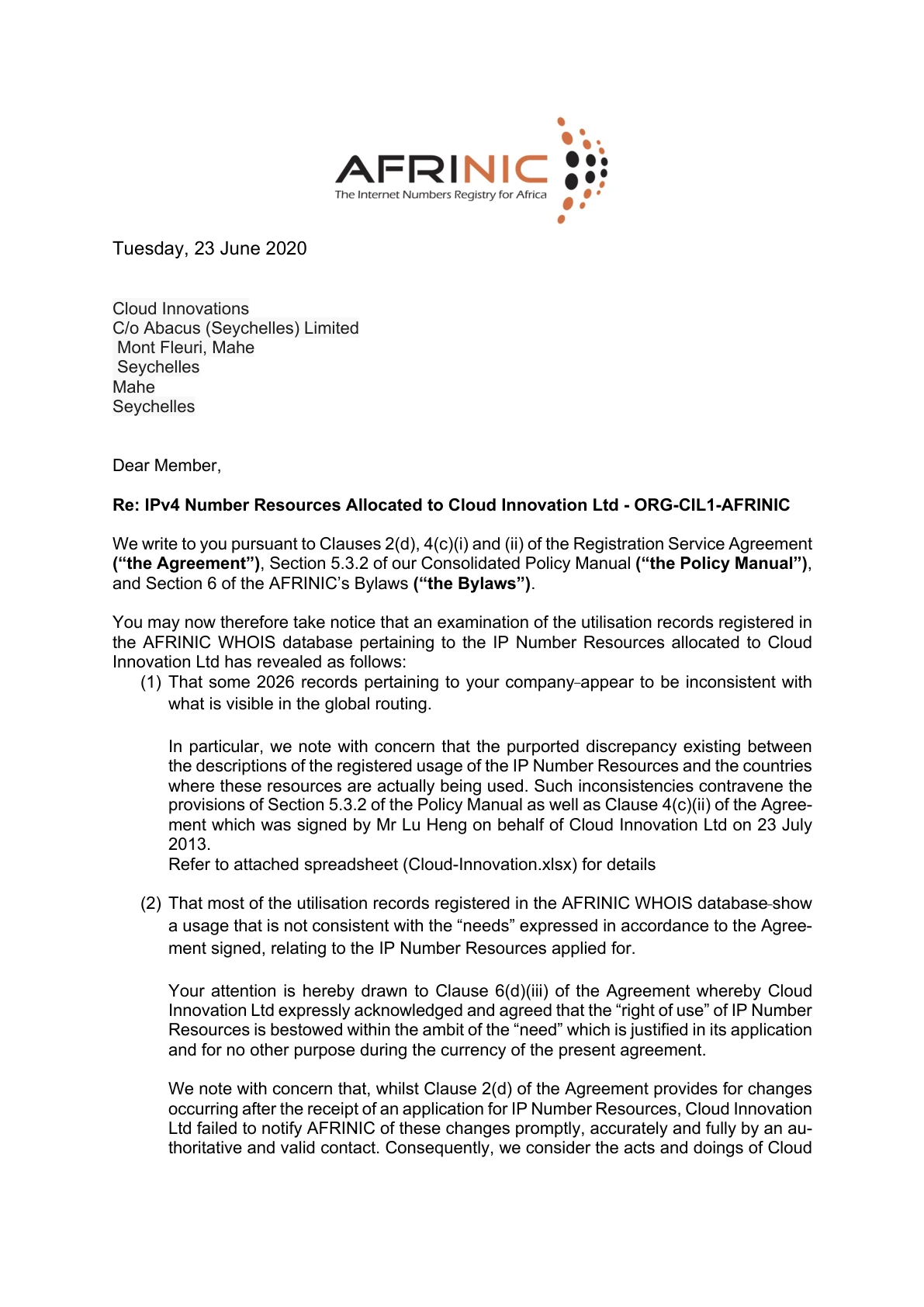
AFRINIC’s challenge to Cloud Innovation became explicit in a 23 June 2020 letter. The registry alleged discrepancies in 2,026 usage records, said some uses no longer matched the needs behind the allocations and accused the company of failing to notify it properly of changes. It invoked the registration agreement, bylaws and policy manual.
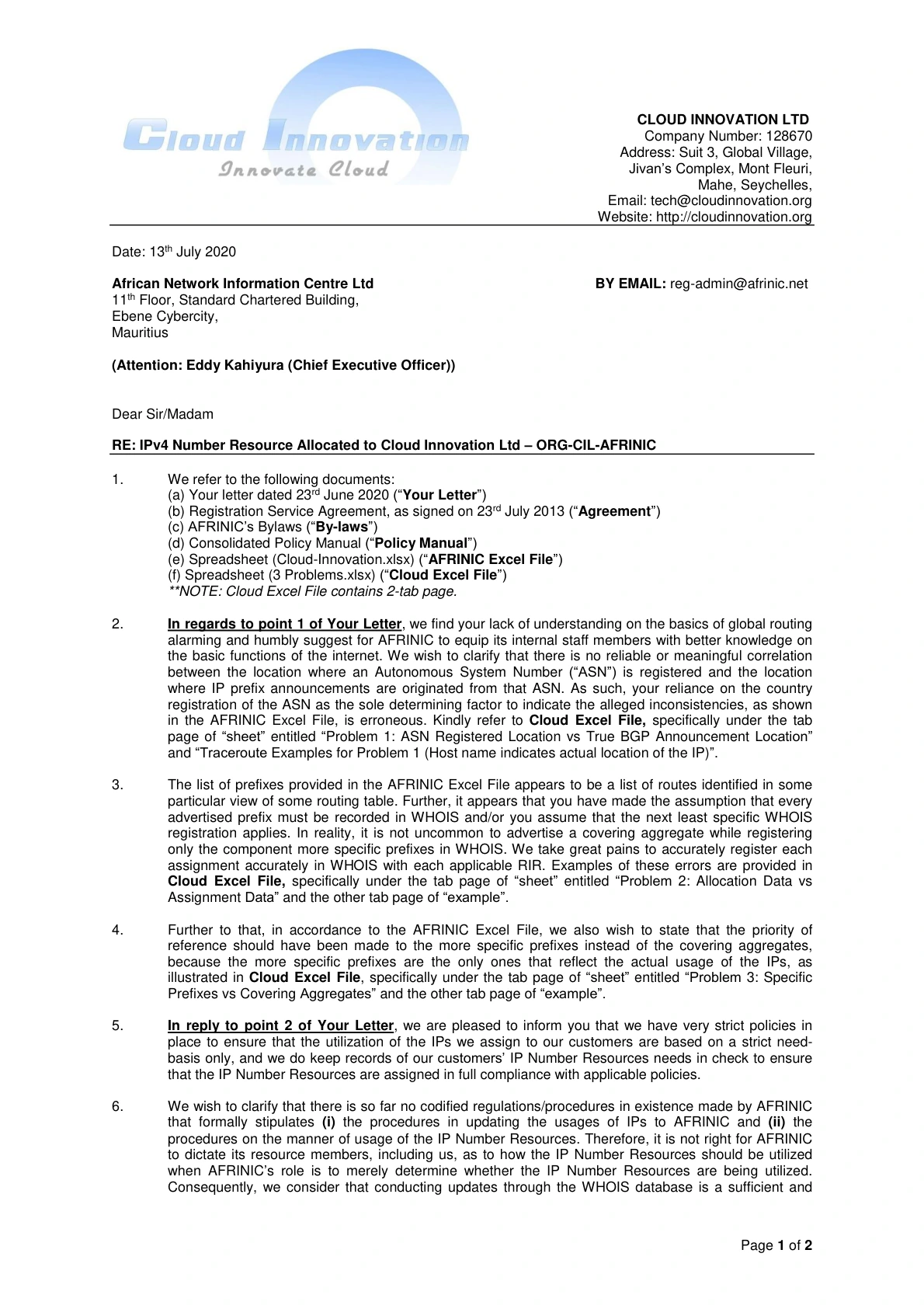
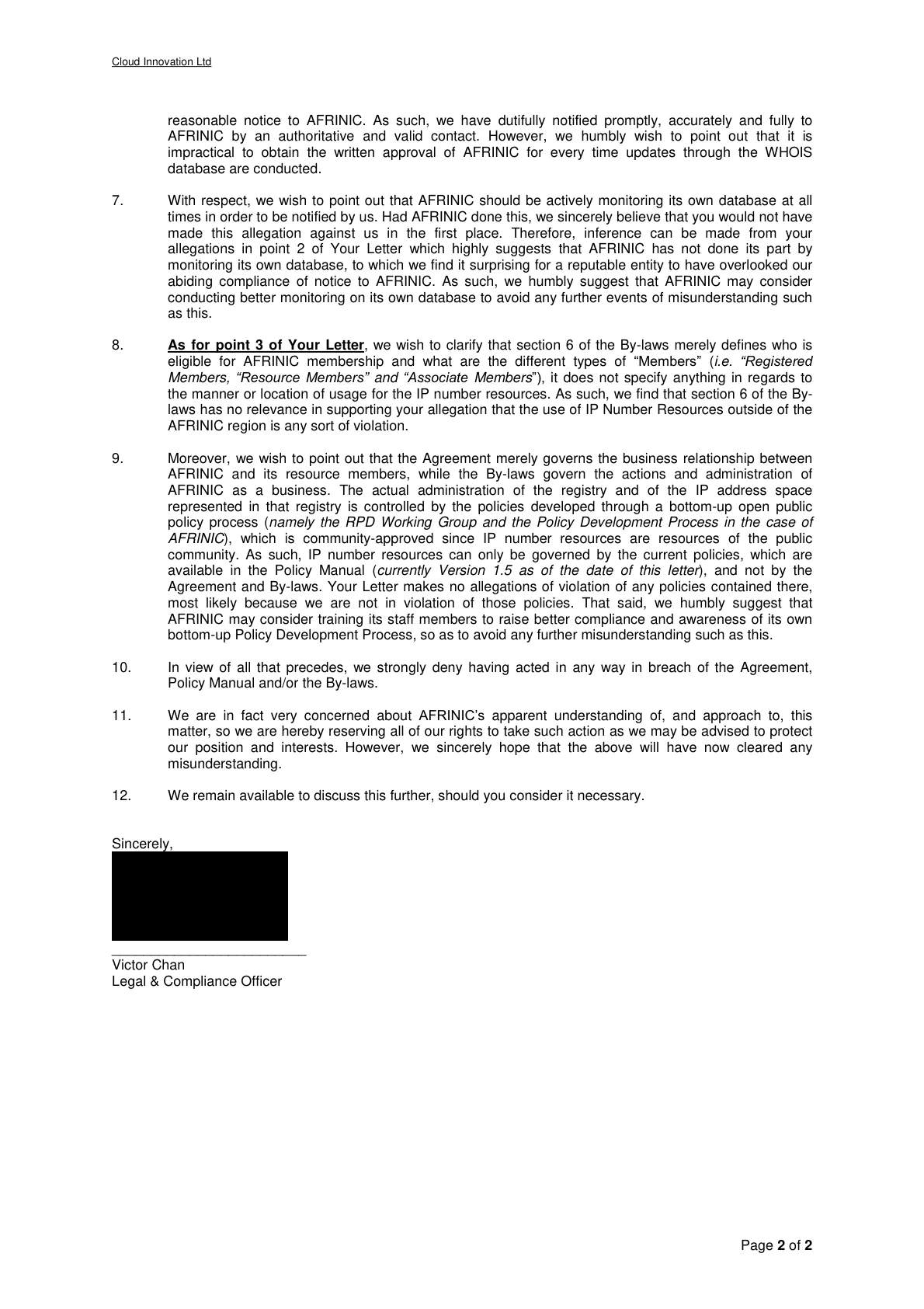
Cloud Innovation denied breaching those obligations. It argued that the country in which an autonomous system number was registered did not reliably establish where its routes originated. It said customer needs were documented and that updates to the WHOIS registration database provided sufficient notice of changes.
The dispute turned on 2 related questions. Where were the addresses actually being used, and did those uses comply with the conditions under which AFRINIC had allocated them? A discrepancy in registration data could trigger an inquiry without establishing either the physical location or the contractual status of a deployment.
Lu had previously offered an unequivocal assurance about the African purpose of the business. In a 20 September 2014 policy-list message, he wrote, “the resource we take are using in africa,” and “we are investing in africa.” Customer assignments and deployments could change over the following 12 years. The unresolved question is how those changes were justified and communicated to the registry.
An IPinfo analysis of observations dated 24 October 2026 detected 461,393 AFRINIC IPv4 addresses outside the registry’s region and attributed 81% of that overseas subset to Cloud Innovation’s 4 blocks. Among the measurable portions of those blocks, 13.5% were outside the region. The 81% figure concerns the detected overseas subset, not all African addresses.
The WHEREIS research uses network measurements to constrain physical location. In its December 2024 AFRINIC case study, registry staff classified 77 of 106 sample prefixes as unacceptable uses, 19 as accepted and 10 as unresolved. That sample covered AFRINIC resources generally. It illustrates why an overseas observation requires further assessment, including whether the deployment supports connectivity back to Africa.
AFRINIC’s soft-landing policy limits out-of-region use to supporting connectivity to its region. The application of that provision to earlier allocations depends on the relevant agreement and policy framework. A location measurement alone cannot settle that legal question.
AFRINIC’s stolen addresses belong to a separate investigation
AFRINIC has acknowledged a different failure inside its own systems. Its January 2021 WHOIS audit report said 2,371,584 addresses had been misappropriated from its pool and attributed to organizations without justification. It reported reclaiming 1,060,864, with 1,310,720 still subject to due diligence.
An earlier statement described incorrect reclassification, an investigation involving a former employee and a referral to the Mauritian police. Those losses belong to a separate case from the dispute over Cloud Innovation’s 4 allocations. No demonstrated block-level connection ties those allocations to the addresses identified as misappropriated in the audit.
The common institutional problem is the reliability of registration and entitlement checks. AFRINIC has had to account for failures in its own controls while seeking to enforce conditions against a major resource holder. Its internal misconduct investigation does not resolve the allocation dispute, and the allocation dispute does not establish Lu’s involvement in that misconduct.
Mauritian litigation and AFRINIC’s operating capacity
The conflict has already affected AFRINIC’s capacity to operate. Its 2021 financial statements say the attachment of funds prevented it from meeting financial commitments from 23 July to 15 October. It received $504,238 in assistance, recorded as payables. The same accounts identify a contested $1.8 billion compensation claim by Cloud Innovation, rather than an award against the registry.
Cloud Innovation has also prevailed on important legal issues. In 2022 SCJ 253, the court rejected AFRINIC’s abuse-of-process objection to a particular injunction application and criticized the registry for flouting an earlier order. In 2024 SCJ 473, the Court of Civil Appeal set aside AFRINIC’s appeal because it had not been validly authorized, restoring the receivership order and directing completion of the election process. These rulings addressed specific procedural and governance questions, without settling every alleged breach of the allocation agreement.
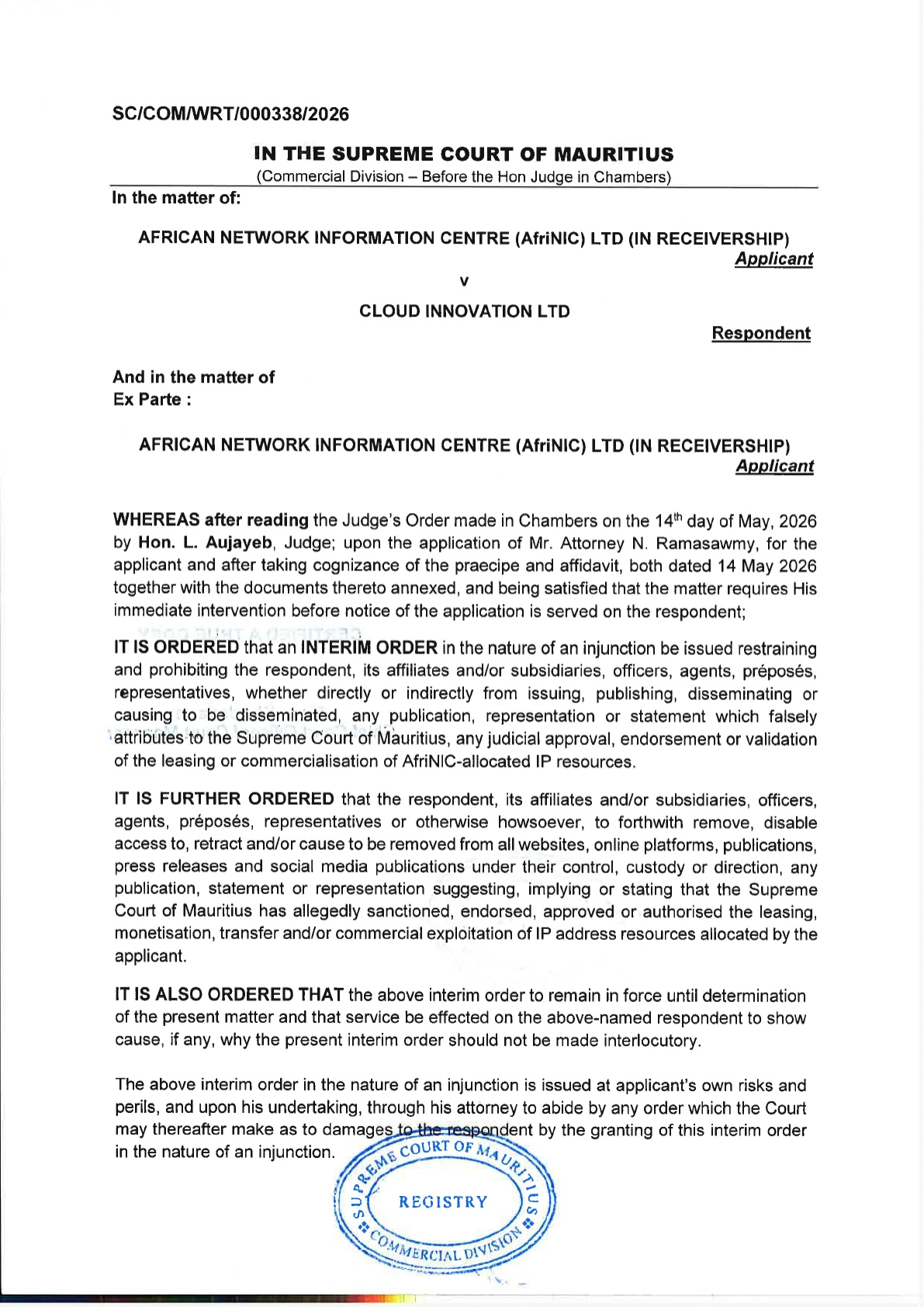
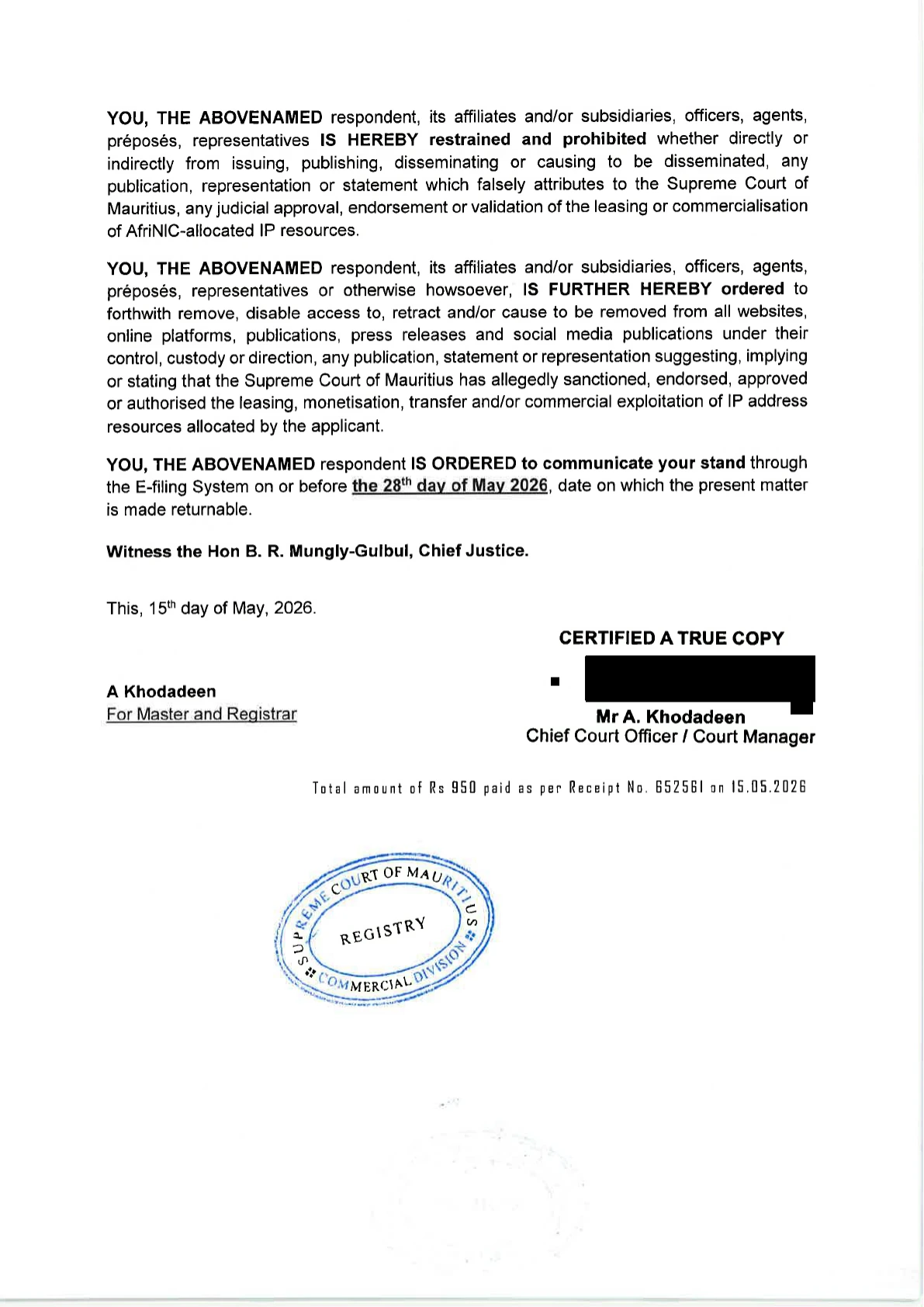
A separate interim order made in May 2026 restrained statements falsely attributing Supreme Court approval to the leasing or commercialization of AFRINIC-allocated resources. It was obtained before notice to Cloud Innovation. The company denies that anyone made such a claim. The injunction addressed representations about judicial approval, rather than delivering a final ruling on the entire leasing business. Its subsequent procedural history and present force remain unconfirmed.
Innovation Service and ICANN’s .help registry agreement
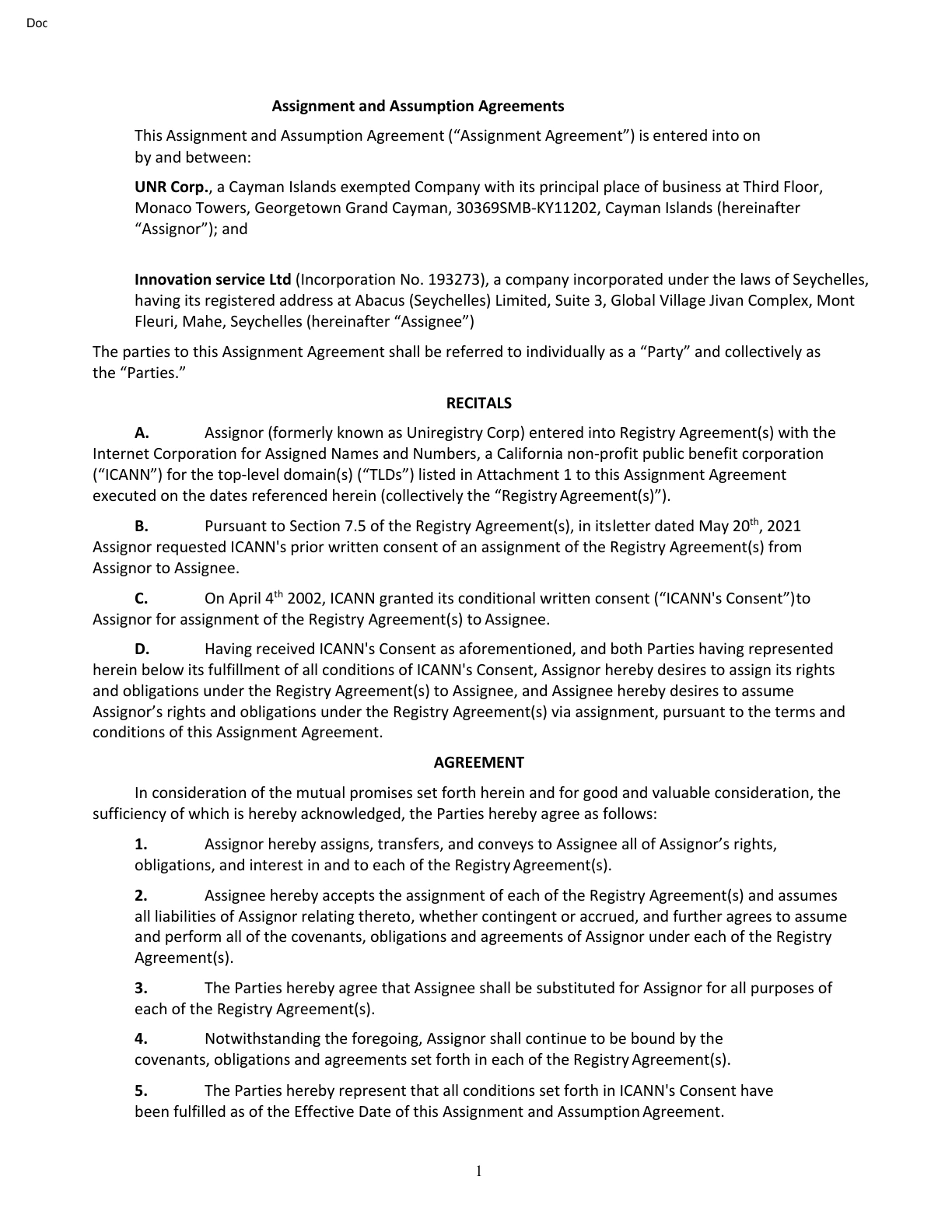
While the address litigation continued, Innovation Service entered a different part of the Internet’s infrastructure. In April 2022, it took over the .help registry agreement from UNR Corp., a Cayman Islands company formerly called Uniregistry. The agreement identifies Innovation Service as Seychelles company 193273 and Heng Lu as its CEO.
The assignment transferred contractual registry rights and obligations. Clauses 8 and 9 expressly withheld ownership of the top-level domain or the characters making up its name. IANA completed the manager transfer in January 2024, and ICANN’s renewal letter, addressed to Lu, provided a further 10-year term beginning in June 2024.
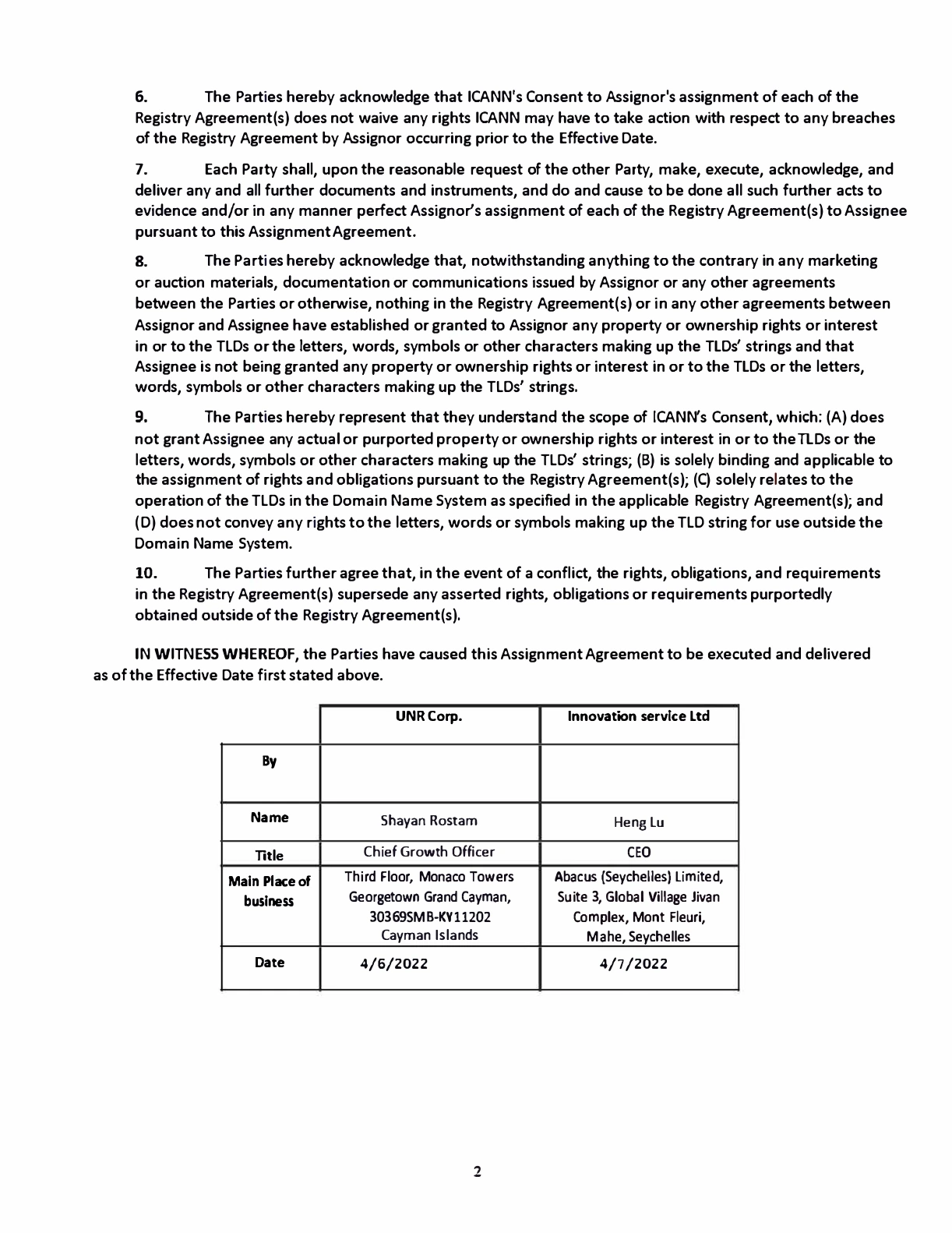
At the relevant dates, AFRINIC’s correspondence and the .help assignment placed Cloud Innovation and Innovation Service at the same Seychelles corporate-services address, care of Abacus. Innovation Service’s technical contact is CentralNIC in London. These are separate functions from corporate ownership and from Lu’s disclosed executive control.
Innovation Service’s registry policy dated 7 April 2022 reserves powers to deny, cancel or transfer domain registrations, impose locks and suspend domains for abuse. For specified actions, it asserts “unlimited and sole discretion.” Cloud Innovation’s account of a number registry’s role emphasizes a narrower function of maintaining records without the powers of a state. Domain abuse and number-allocation rules serve different purposes, but both businesses operate through contracts defining when an institution may intervene in a registration.
ICANN’s 10 applications and LARUS’s visibility at NANOG
Innovation Service is now pursuing 10 primary strings, .connect, .donate, .faq, .fix, .larus, .real, .send, .uid, .visit and .vpn. Its 10 applications are equivalent to 62.5% of the 16 Africa-classified applications announced in October.
ICANN classifies the applicant under Africa because it is located in Seychelles. That category does not make the proposed extensions Africa-only domains or establish an African connectivity purpose. The applications remain in pre-evaluation processing; they have not been awarded as registry contracts.
The .larus application explicitly connects the proposed domain business to the existing IPv4 operation. Its marketing plan would draw on LARUS’s relationships with Internet service providers, hosting businesses and infrastructure customers. Approval would expand the company’s contractual role within ICANN and its standing as a supplier in the domain market.
LARUS has already secured prominent positions at technical meetings. It hosted NANOG 95 in October 2025, whose opening-session announcement listed Lu, and appeared among the Diamond sponsors at NANOG 96 in February 2026. Those arrangements placed its brand alongside established Internet institutions and other major sponsors.

ICANN also markets meeting sponsorship to businesses seeking visibility among industry and government participants. Its prospectus offers branding, exhibition space and meeting rooms. A larger domain portfolio and further sponsorship could reinforce Lu’s institutional profile. LARUS’s future participation in ICANN meeting sponsorship remains unconfirmed.
The combination offers a route to institutional legitimacy through commercial participation and repeated visibility. The contractual disputes remain separate from that profile. At RIPE NCC, a refused sponsorship offer became part of the public disagreement over registry powers. ICANN’s applicant evaluation rules separately provide for scrutiny of organizations, directors, material shareholders and controllers.
AFRINIC membership does not convey ownership of the address pool
Cloud Innovation’s case for winding up AFRINIC presents liquidation as a route to reformed governance or interim custodianship, with services maintained during a transition. ICANN emphasized the registry’s public obligations. In a July 2025 open letter, it said number resources were not AFRINIC’s assets and the registry function could not serve the protection of a single creditor or member.
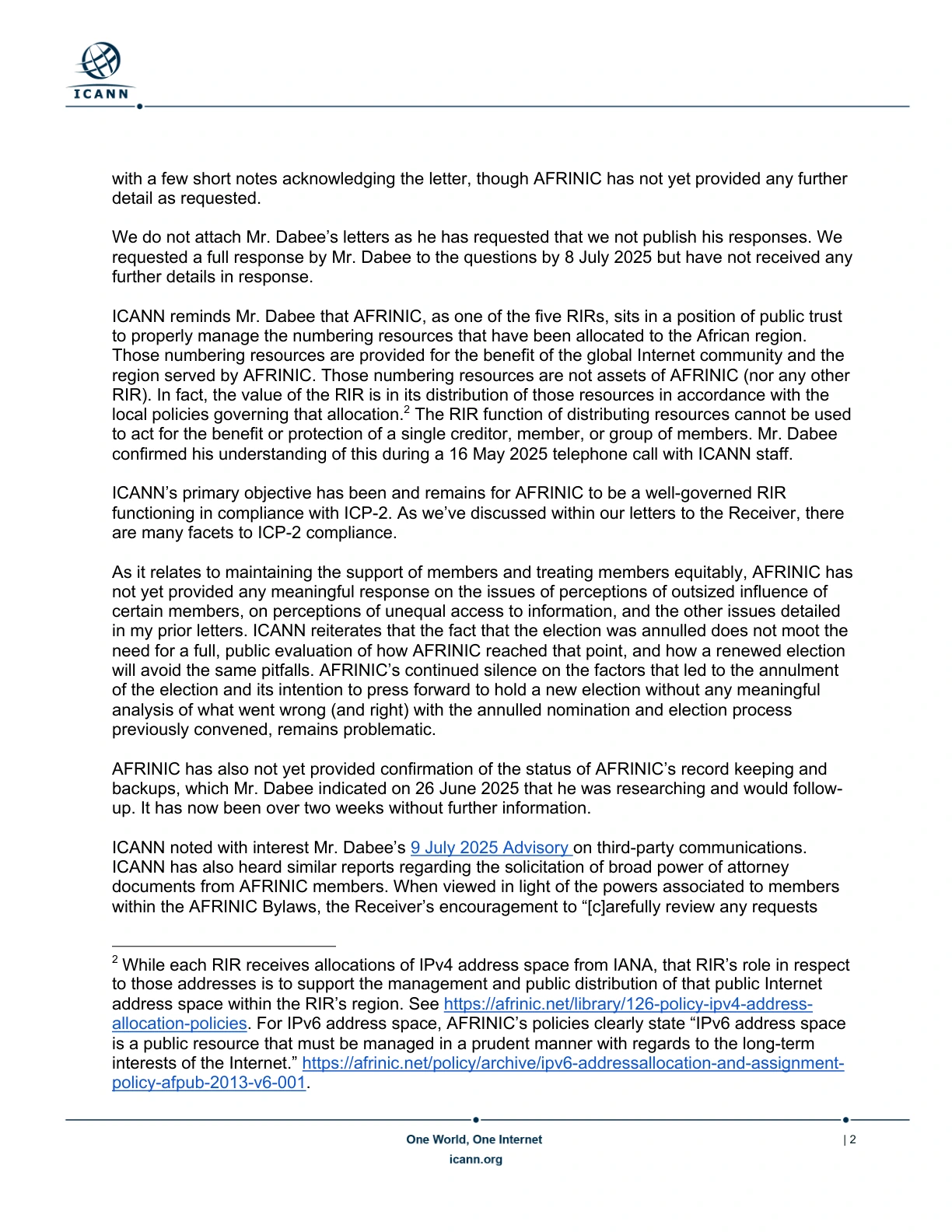
ICANN also criticized the receiver’s handling of governance, elections and information requests. Its concern about private capture accompanied demands for accountability from AFRINIC’s own administration. The letter did not endorse the company’s liquidation proposal.
The dispute extended to membership in October 2026. A court rule published by Cloud Innovation directed rectification of AFRINIC’s membership register under section 91 of the Companies Act. A Registrar of Companies extract dated 28 October listed Cloud Innovation in the Members section from 9 October. Its separate Shareholders table was empty.
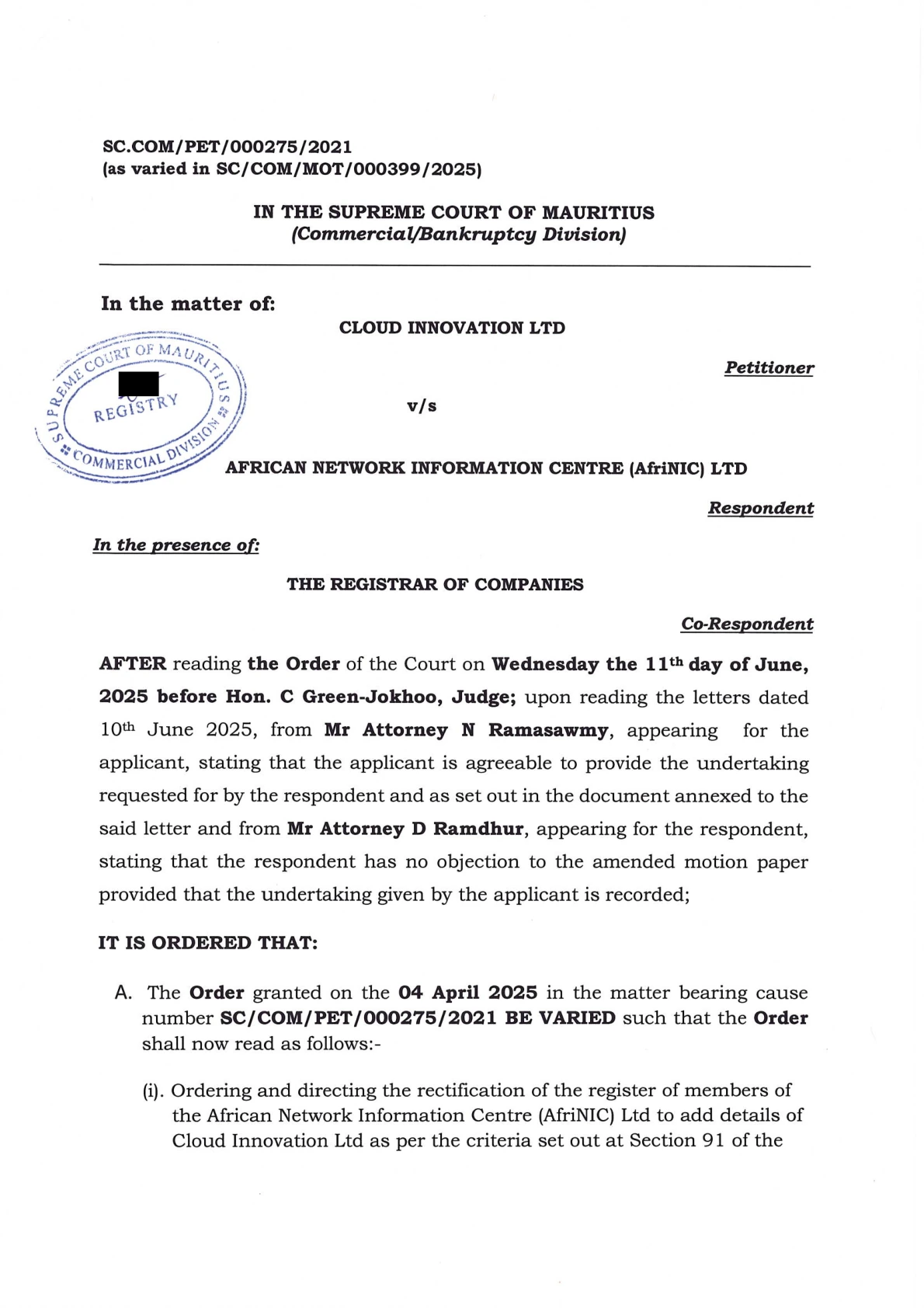
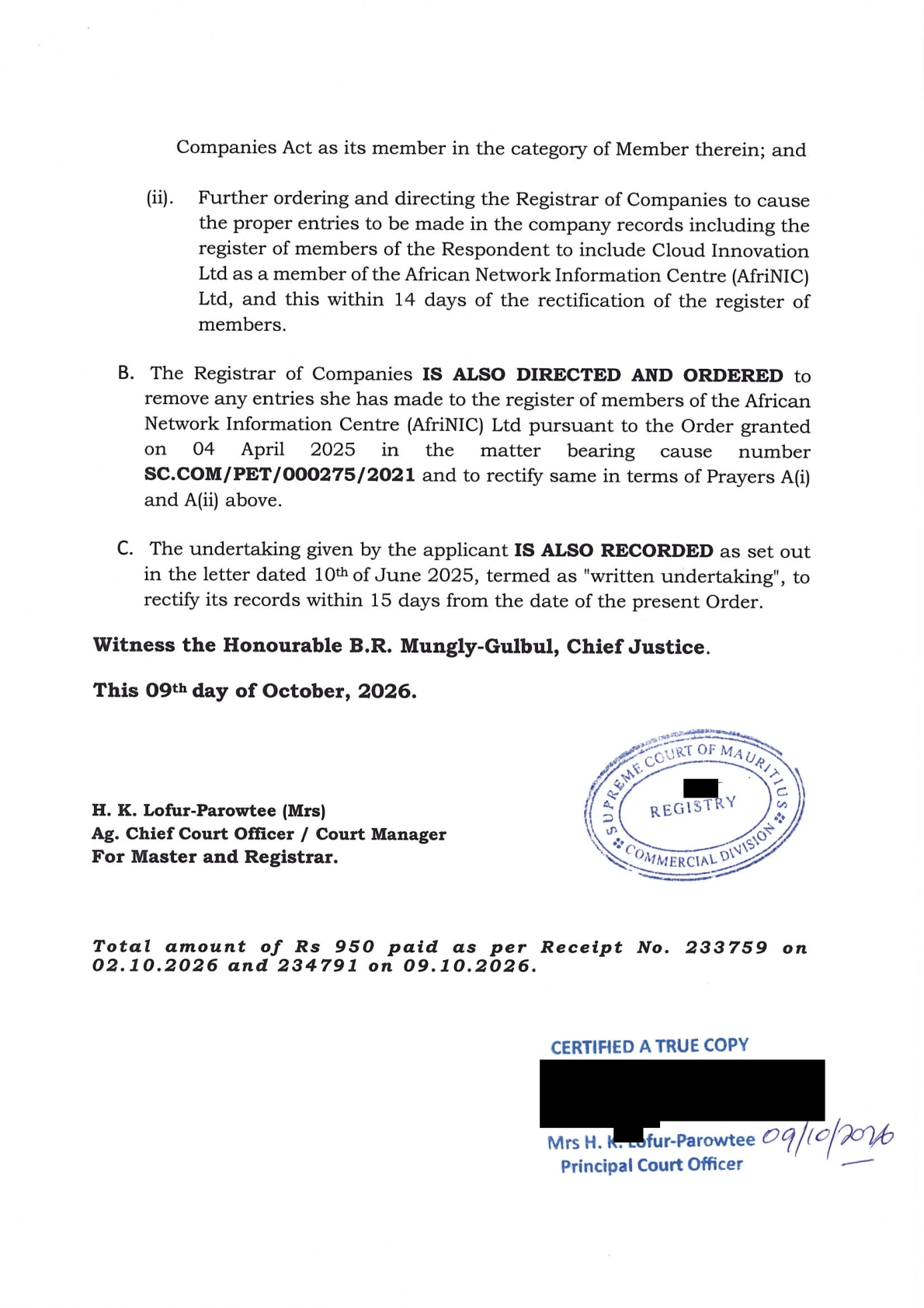
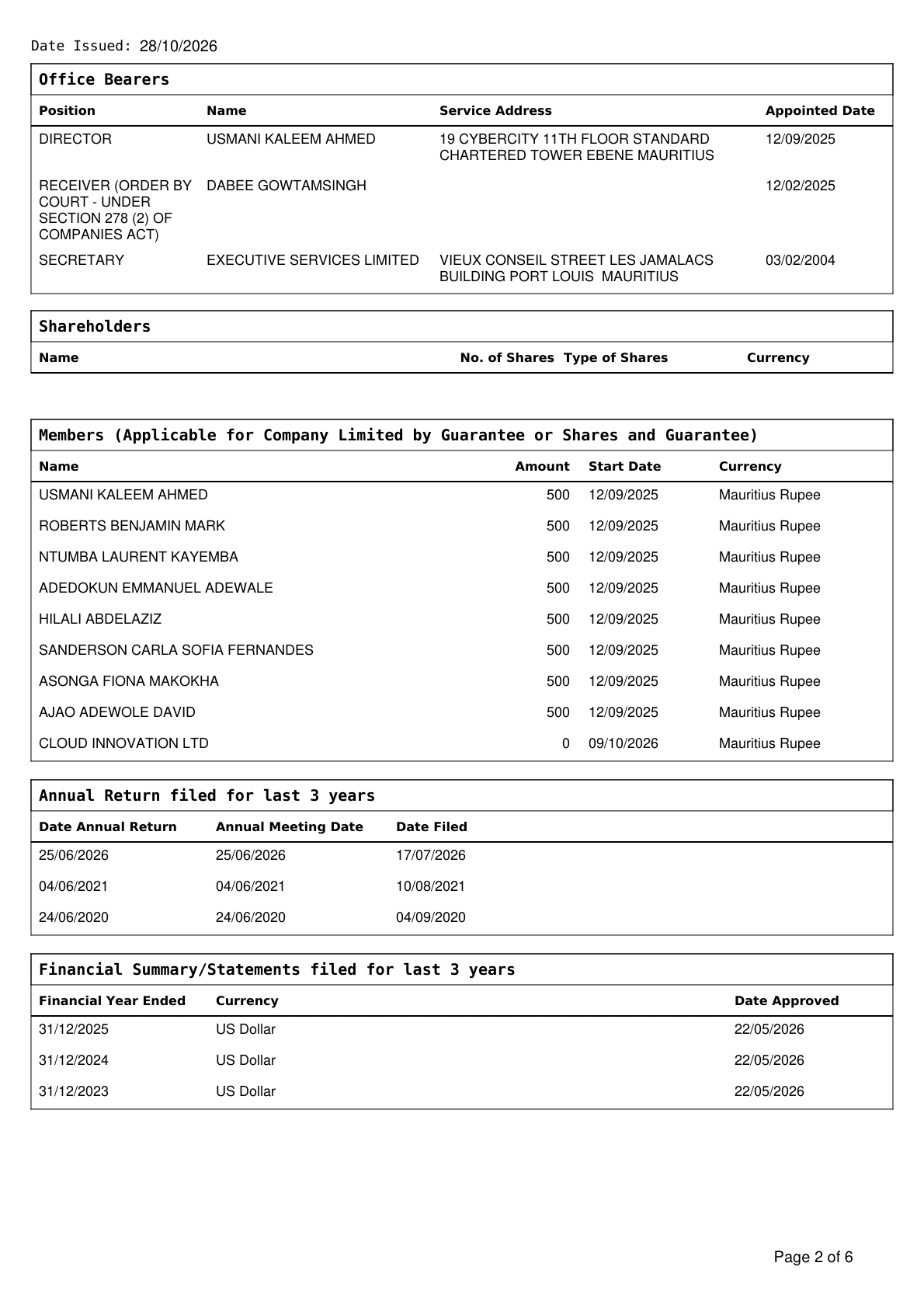
AFRINIC sought the company’s removal. Cloud Innovation asserted its rights as a resource member and accepted that classification as a Registered Member, AFRINIC’s category for directors, had been incorrect. The parties continue to contest the entry’s legal consequences. The membership orders do not convey ownership of AFRINIC’s address pool.
The documented chronology
2010–2026 · The documented trajectory
From technical networks to institutional power
OutsideHeaven at RIPE meetings
The argument over addresses and rules
He advocates returning unused addresses and stands for the RIPE Programme Committee.
2 jurisdictions, 2 distinct records
ICIJ dates OutsideHeaven Ltd’s BVI incorporation to May; AFRINIC identifies the Cloud agreement date as July.
LARUS incorporates in Hong Kong
The Foundation and its tax status
LARUS Foundation is incorporated; charitable tax exemption takes effect the following year.
The contractual conflict becomes explicit
AFRINIC alleges compliance discrepancies; Cloud Innovation denies breach.
Litigation reaches the registry’s finances
A provisional attachment disrupts AFRINIC’s financial commitments.
Innovation Service takes over .help
Innovation Service takes over the .help agreement; IANA later completes the manager transfer.
A presence across several institutions
RIPE NCC appoints Lu to an election conduct team; Cloud seeks AFRINIC’s winding up; LARUS hosts NANOG 95.
Domains, membership and overseas deployment
LARUS sponsors NANOG 96; ICANN publishes the new applications; the membership dispute and IPinfo measurements add separate developments.
African digital sovereignty depends on the authority to enforce common rules
The strategic issue is a gap between where resources are administered, where businesses operate and who can enforce the conditions connecting them. Cloud Innovation’s registry relationship is in Mauritius, its company is in Seychelles, its commercial operator is in Hong Kong, and its customers can operate across borders. Those are different legal and operational relationships. None alone identifies where all value is earned, where tax is due or who bears responsibility for a particular decision.
Africa’s digital sovereignty in this case is the capacity to maintain an accountable regional institution and enforce rules that its community can question and revise. That does not require treating a foreign entrepreneur as an adversary because of nationality, or turning a regional registry into state property. ICANN’s letter frames number-resource administration as an obligation to a broader community, rather than an asset available to satisfy a single private interest.
The consequences are practical. AFRINIC’s 2021 financial interruption demonstrates how a dispute with one resource holder can affect an institution serving many others. For operators, the risk is uncertainty over the records and permissions on which network administration depends. For states and public institutions, it is reliance on a service whose governance they cannot secure simply by financing a national data center. For civil society and smaller networks, it is the possibility that legal resources and organized representation carry more weight than participation alone.
The domain applications add a second arena of influence. Applicant location counts Seychelles within Africa, while the .larus business plan targets an international market. An African statistical classification therefore cannot measure the distribution of benefits across African networks. The relevant questions concern investment, jobs, service conditions, accountability and who has a meaningful voice in decisions.
A company may legitimately advocate policies that favor its business. A registry may legitimately contest that interpretation. Institutional capture would require further evidence that private interests had displaced the institution’s duties through control of decisions, conflicts of interest or improper constraints. Here, litigation, operating mandates, public advocacy and sponsorship establish several channels of influence. They do not establish that any institution has already surrendered its decision-making authority.
What Seychelles, Mauritius and Hong Kong can clarify
In Seychelles, the immediate questions concern the certified company histories and beneficial-owner records of Cloud Innovation, number 128670, and Innovation Service, number 193273. Their shared corporate-services address at the relevant dates and Lu’s documented roles justify comparing the ownership chain, directors, authority to sign and related-party agreements. A professional registered office can serve many legitimate businesses. Its existence does not establish that either company is fictitious or that profits have been concealed.
In Hong Kong, LARUS’s incorporation and name change provide identifiers for annual returns, director histories and contracts. The significant-controllers regime identifies records that qualifying companies must maintain, but an incorporation list is not a beneficial-ownership register. The Foundation’s separate incorporation and tax-exempt status likewise do not reveal the source of every donation or the financial terms of its relationship with the commercial businesses.
In Mauritius, the priority is a complete procedural account of the liquidation petition, the decisions authorizing it, the current force of interim orders and the proposed arrangements for registry continuity. A challenge to a company’s contractual conduct does not automatically make an individual director personally liable. Lu’s instructions and authority matter where they connect to a specified decision or legal obligation. Any inquiry into tax or financial offenses would require evidence of the relevant transactions and duties, not a map of offshore addresses.
Transparency and continuity before the next institutional crisis
AFRINIC and the other registries should make declared controllers, commercial operating mandates and material changes in use easier to verify against the registration agreement, subject to justified protection of customer information. The 2020 correspondence and Cloud Innovation’s response expose disagreement over both the evidence of deployment and the obligation to report changes. Published evidentiary standards, a reasoned decision and a timely appeal would protect the community and the resource holder.
Election systems should disclose the number and scope of proxies or representative mandates held by an intermediary, verify their validity with the principal and provide a usable withdrawal mechanism. The NRS representation model makes that an operational question. Disclosure can show how authority is concentrated without publishing private identity documents or treating all coordinated participation as abuse. Conflict declarations should also identify relevant business, litigation and sponsorship relationships.
ICANN should apply its applicant-evaluation rules to the disclosed controllers and organizations on their merits, publish reasoned outcomes and maintain a clear separation between commercial visibility and evaluation authority. Meetings should disclose sponsors and what the purchase provides. NANOG’s sponsor presentation documents a commercial relationship; it does not certify the sponsor’s compliance in a different institution.
African governments and regional institutions should support independent, proportionate audits of entitlement and deployment, transparent proceedings and a tested continuity plan for AFRINIC’s services. The registry’s own misappropriation audit demonstrates why internal controls must be examined alongside members’ conduct. Enforcement should identify the affected blocks, the rule and the remedy, with due process and an assessment of consequences for downstream networks.
Operators and public funders should also maintain investment in IPv6 and affordable interconnection. The exhaustion of the central IPv4 pool explains the persistence of scarcity; replacing dependence on a few IPv4 intermediaries requires a technical transition as well as institutional reform. That transition does not eliminate the need to resolve existing contractual rights or protect networks still relying on IPv4.
Control and continuity remain unresolved
The central accountability gap lies between the companies’ declared operating structure and the rights each claims. Lu is identified as the agreement signatory and operational coordinator of the address business, and as the disclosed controller of the domain applicant. The full registered and beneficial ownership of Cloud Innovation and LARUS, and the financial terms between them, remain unresolved.
The allocation dispute also leaves a substantive question unanswered. Which changes in the use of Cloud Innovation’s addresses were justified under the applicable agreement, and which were notified to AFRINIC? The company denies breach; the registry alleges noncompliance. Overseas measurements sharpen that dispute but do not determine it.
A liquidation process would have to address who maintains registration records, authorizes changes and protects services for networks outside the case. Corporate membership and a resource allocation do not, by themselves, confer the authority to perform AFRINIC’s regional coordination function. Lu’s role makes his instructions and the arrangements among his companies relevant to that question, without automatically making him personally liable for their acts.
For the African networks dependent on the registry, the practical stakes are continued service and consistent access to scarce resources. Those obligations would survive the end of any single contract or the restructuring of AFRINIC itself. A commercial operator’s institutional profile cannot discharge them, and the registry’s public purpose cannot excuse failures in its own governance.
The remaining questions are specific. Who held the full ownership interests at each material date? What support financed NRS, and who authorized its mandates? Which deployments complied with AFRINIC’s agreements? Which legal entity used the OutsideHeaven name in each transaction? Answers require attributable records and responses, rather than assumptions about jurisdiction or association.
Part 1 of a 5-article investigation into the control and accountability of Africa’s Internet resources. The author reports that the series is being developed in collaboration with journalists from Forbidden Stories.