
AFRODIG INVESTIGATIONS · PART 3 OF 5
Dave Kissoondoyal brings what a campaign seeking roots in Africa’s Internet community needs. A record of service, networks, institutions that recognise his name. To me, his trajectory illuminates how NRS, the organisation linked to Lu Heng, draws on that legitimacy. In Prague, I had heard him urge Africa to unite behind AfriNIC. Days later, his name appeared in NRS’s campaign. Between those 2 moments, a common slate had been taking shape. I was at the heart of its negotiations.

This is Part 3 of a 5-part investigative series. Part 1 follows the commercial interests and institutional conflicts surrounding Lu Heng. Part 2 examines NRS’s claims to representation and its .nrs project at ICANN. This instalment follows the people, alliances and concessions that give this struggle an African presence.
Prague, before the slates diverged
In the lobby of the Prague Congress Centre, in the Czech Republic, I was preparing the first round of interviews. We were at ICANN83, held from 9 to 12 June 2025. Smart Africa was looking for candidates around whom a coalition could gather for AfriNIC’s Board. I had been tasked with organising this initial selection. Individual candidacies still had to become a proposal that several constituencies could support.
Among those interviewed were Professor Emmanuel Adewale Adedokun, now chair of AfriNIC’s Board, and Tomboye Ibrahim Mahamat Itno, deputy director general of SAFITEL Chad. And then Dave. A senior community member from the Indian Ocean had vouched for him in preparatory exchanges known to me. His experience at ICANN and within At-Large opened a door. He still had to make his case.
I remember a sharply dressed man, composed and deliberate in his choice of words. The substance of his intervention was clear. Africa needed to unite behind AfriNIC. His message met the purpose of our effort, bringing together people we regarded as independent to restore the registry’s ability to function and protect it from Lu Heng’s influence. Dave was seeking a place in that coalition.
At the same time, Smart Africa was presenting its Blueprint and CAIGA, the proposed Council of African Internet Governance Authorities that would become another point of contention. The Prague programme scheduled a presentation to the African GAC on 9 June and a working session on 11 June. Supporting candidates together did not dissolve differences over the future of governance. AF* would challenge CAIGA’s direction, while Smart Africa would defend a coordination mechanism with no decision-making authority over Internet resources.
3 days in the corridors
Dave’s interview could not settle the discussion. Other organisations had their preferences, sometimes candidates of their own. As I remember it, consultations lasted 3 days. Smart Africa sought common ground with AFNOG, organisations within AF* and other participants. Each candidacy raised a concrete political question. Who would support it, and who would make room for it?
In the congress centre’s corridors, I followed negotiations in which I was participating. I remember the telephone exchanges involving Lacina Koné, Smart Africa’s director general, and Thelma Quaye, its director of Infrastructure, Skills and Empowerment, with Professor Nii Quaynor, a founding figure in AFNOG and AfriNIC, and other actors whose identities I am keeping private. Those calls were part of the effort to bring positions together around the slate. The aim was to secure support extending beyond Smart Africa and its initial interlocutors.
There were careers, responsibilities and proposals already backed by supporters to accommodate. A name might bring some parties together without carrying the others. The move from an individual candidacy to a common one depended on accepting a compromise that could leave someone outside the slate.
Several people accepted that concession. In the negotiations in which I took part, Mokgabudi Lucky Masilela, chief executive of Registry.Africa, the operator of the .africa domain, Philippe Kouamé, director of Digital Trust at Côte d’Ivoire’s ARTCI, Tomboye and other community members agreed to step aside in building the collective candidacy. This concerns their place within the coalition, not an administrative withdrawal of every candidacy lodged with AfriNIC.
Those decisions had a tangible consequence. People capable of advancing their own candidacies accepted that another name would be put forward. I sum up the spirit of that mobilisation as saving AfriNIC, or, in the French expression, sauver le soldat AfriNIC. The formulation is mine. It captures the objective we pursued, placing the registry’s recovery ahead of anyone’s position on the slate. It does not claim to reveal what each person privately thought.
The Mauritian litigation also hung over our discussions. We wanted to bring AfriNIC out of an institutional vulnerability I had examined in earlier reporting on the actors in the judicial battle and alleged connections around its receivership. I participated with that conviction. It explains my position in the scene I recount.
The slate before the final compromise
One document shows what was still changing. In the working slate published here, Dave holds the Indian Ocean place. Tomboye occupies 1 of the 2 region-independent places. Their portraits have already been assembled with those of the other 6 candidates. This version, which I place during the Prague negotiations, records an intermediate stage of an agreement under construction.
Smart Africa’s 14 June 2025 statement publishes a different composition. Kaleem Usmani occupies the Indian Ocean place, and Ben Roberts appears among the region-independent candidates. Dave and Tomboye are no longer on that slate; the other 6 names remain. Comparing the 2 documents makes the changes visible. My testimony describes concessions accompanying that process, without turning the working slate into proof of a final agreement by every participant.
During the wait, I had the impression that Dave was growing impatient. That impression stayed with me. It reveals neither a secret commitment nor the reason for his later appearance on another slate. It conveys only the distance between a candidate ready to proceed and a coalition still trying to find its balance.
Meanwhile, the judicial timetable
On 13 June, an interim order obtained by the Tanzanian Internet Service Providers Association, TISPA, restrained AfriNIC and its receiver from proceeding with electronic voting scheduled for 16 June and the election scheduled for 23 June. In case SC/COM/WRT/000435/2025, the Supreme Court of Mauritius also required compliance with the bylaws and the order of 12 September 2023.
The injunction was discharged on 18 June, when electronic voting opened, with in-person voting still set for 23 June. It delayed online voting by 2 days. It did not suspend the search for community endorsements. Its date, after the ICANN83 week, does not establish that it caused the 3 days of consultations in Prague.
Dave, on the other slate
Then his name appears again. On 19 June, an NRS email reproduced on the public ZANOG mailing list promotes Dave for the Indian Ocean. Around 1 week after Prague, the man whose call for unity I had heard was being promoted by the organisation associated with the influence from which we wanted to protect the registry. The succession of slates gives his trajectory its tension. It does not date any private agreement with NRS.
The organisational connection to Lu Heng is documented. In its 16 July 2025 letter, ICANN describes NRS as directly linked to Cloud Innovation’s chief executive and raises concerns about its campaign for private ownership of IP addresses. NRS acknowledges Cloud Innovation’s support while asserting its independence. This does not prove that Lu Heng personally recruited or paid Dave, or that Dave accepted the entire programme advanced in his name.
Dave’s trajectory nevertheless reveals a mechanism this investigation can follow. A reputation earned within the community becomes a campaign argument. A name, a portrait and institutional affiliations give a local face to a project to transform the registry. In Prague, we sought that legitimacy for a coalition we intended to protect AfriNIC. NRS invoked it in turn to advance a different direction. The next stage of the story begins with that movement of endorsements.
From Dave to the 8 names in NRS’s campaign
The NRS election programme associated 8 candidacies with permanent address ownership, the abolition of compulsory membership fees and registry funding through transaction charges. The portraits below reproduce its public presentation. This is NRS’s own slate, distinct from the community proposal considered in Prague.
The investigation now compares those endorsements with documented roles, country by country. Chairing NRS, signing an agreement, organising a seminar and appearing on an electoral slate are different forms of involvement. Dave opens that comparison. His trajectory alone cannot establish a disciplined continental bloc.
 Hamza Bourougaa
- Country in candidate dossier
- Tunisia
- Seat sought
- Northern Africa
 Terry Edet Okon
- Country in candidate dossier
- Nigeria
- Seat sought
- Western Africa
 Dewandranath Kissoondoyal
- Country in candidate dossier
- Mauritius
- Seat sought
- Indian Ocean
 Cedric Andre Yana
- Country in candidate dossier
- Cameroon
- Seat sought
- Central Africa
 Paul Wollner
- Country in candidate dossier
- South Africa
- Seat sought
- Southern Africa
 Ephraim Hensley Okalebo
- Country in candidate dossier
- Uganda
- Seat sought
- Eastern Africa
 Michiel Jacobus Bester
- Country in candidate dossier
- South Africa
- Seat sought
- Region-independent
 Petrus Phillipus Willemse
- Country in candidate dossier
- South Africa
- Seat sought
- Region-independent
The coalition was contested from within the community
The public discussions resist any simple division between a united community and NRS. In the ZANOG thread on election endorsements, Eddy Kayihura argued for consensus and defended governments’ place among community stakeholders. Amin Dayekh objected to what he saw as a top-down slate associated with Smart Africa. Other participants debated whether competing candidacies would split the vote. These exchanges expose disagreements over who could legitimately speak for the community.
Dayekh’s later call to annul the disputed June poll is particularly instructive. Criticism of Smart Africa did not automatically mean support for the election process NRS was seeking to influence. Treating every dissenter as Lu’s ally would erase precisely the independent judgment that a community-led registry needs.
The Prague interviews sought agreement on people. The electoral mandates raised a different issue. A candidate’s appeal to unity, including the one I remember from Dave, could not substitute for an organisation’s explicit authority to cast a member’s vote. That distinction leads from the competing lists to the rules of representation.
How 5 proxies became a question of unlimited representation
The word proxy concealed a decisive distinction. AfriNIC’s June 2025 FAQ limited an ordinary proxy holder to representing 5 resource members. It separately allowed an authorised in-person representative to act for an unlimited number. The latter did not need advance notification, but had to bring an authorisation letter, supporting certification and identification. The FAQ also allowed an equivalent legally authorised document where a jurisdiction did not provide notarial certificates.
A power of attorney was relevant to the authority a person could exercise for an organisation. It was not simply another name for the limited electoral proxy. The 18 June communiqué referred members to the separate routes for proxy voting and authorised representation, and to their documentation requirements. This distinction explains how somebody could arrive carrying mandates for many more than 5 organisations without the number alone proving a breach of the published rules.
The weakness was the concentration of responsibility for verification. If 100 organisations knowingly appointed the same representative under the applicable rules, 100 mandates would not become fraudulent merely because they were concentrated. If an organisation had not appointed that representative, its purported mandate could not establish consent. Checking the signatory’s authority, the scope of the instrument and any competing instruction from the member was therefore essential.
For members, the practical questions were separate. Who signed? Could that person bind the organisation? Did the document authorise this particular election, a named representative and a specified duration? Had it been revoked or superseded? Had the organisation already voted by another permitted route? Counting documents could not answer those questions.
What the mailing lists recorded as the poll unravelled
The first difficulty was access. On 19 June, Lionel Whitecross told the ZANOG list that his online registration had been rejected despite earlier acknowledgement. He reproduced a rejection citing the absence of a notarial certificate or equivalent document. This is a participant’s account, not an audit of the application. It nevertheless records the documentary hurdle faced by a remote voter while another route allowed representation to be established in person.
On 23 June, NomCom suspended the election at 17:32 Mauritius time to investigate matters that had come to its attention. Its notice froze both online and in-person voting. The notice itself did not identify perpetrators or determine that the whole set of mandates was invalid.
ISPA’s statement 2 days later supplied concrete allegations. It said individuals had arrived with more than 800 purported powers of attorney in a membership of fewer than 2,400. One authorised representative had reportedly discovered that somebody else had already voted for the organisation under an instrument it had not issued. Another purported mandate allegedly disappeared from the record after a copy was requested. ISPA said its lawyer opened a criminal case on the evening of 23 June.
The number needs to be read correctly. More than 800 purported instruments is not a finding of 800 forged documents or 800 unlawful votes. ISPA’s statement does not identify every carrier, authenticate every mandate or establish which candidates benefited. The substantiated reporting point is that the association publicly described specific incidents and reported a police complaint.
AfriNIC then announced on 25 June that the suspension had been lifted and counting would resume. In the public archive, Andrew Alston challenged what had been done to address the disputed mandates. Jaco Kroon called for a fresh online process with strict verification and wider member participation. The exchange preserves the clash between AfriNIC’s assurance that the process could continue and operators’ demand to know how the defects had been investigated.
On 26 June, receiver Gowtamsingh Dabee announced the annulment and said he was seeking an extension to organise verified elections. His 15 July notice explained that police inquiries had not produced final conclusions and that he could not report the extent of the irregularities. It also announced an online replacement poll with neither powers of attorney nor proxies accepted. The cancellation was a response to unresolved integrity concerns, not a published criminal judgment against the candidates.
The concern extended beyond the South African list. A 26 June NRO statement, circulated through RIPE’s public list and published by ARIN, supported ICANN’s request for transparency. ICANN’s own correspondence asked about access to the voter list, the use of AfriNIC’s logo and any involvement of Cloud or NRS representatives in discussions about disputed mandates. Those were requests for answers, not established findings that every alleged act had occurred.
Cloud and NRS offered a sharply different explanation. In their July statements they characterised the cancellation as a response to 1 disputed proxy that disenfranchised hundreds of legitimate voters. Cloud acknowledged facilitating participation through proxies and presented a court-supervised winding-up as the remaining way to protect the community. NRS defended collective representation as an answer to exclusion. These statements establish their position and their admitted organising role, not the authenticity of every instrument.
The disagreement cannot be settled by repeating either side’s preferred number. The receiver’s July notice referred to concerns about powers of attorney used by some voters and said the extent was unresolved. ICANN also expressly rejected Cloud’s suggestion that liquidation aligned with its wishes. The dispute was therefore over both the facts of the poll and what remedy could legitimately follow.
The judicial network and the evidence it requires
My earlier reporting examined the proximity between private lawyers, judicial officeholders and AfriNIC’s receivership in Mauritius. It also questioned the receiver’s independence and the accountability of the process. Revisiting those articles requires separating documented relationships from the stronger allegation that judges were corrupt. The materials reviewed for this investigation do not establish judicial bribery, payments for a decision or a court finding of corruption in the AfriNIC cases.
There is a direct record of Cloud Innovation’s legal representation. The transcript of the hearing on 25 November 2024, published by Cloud itself, records R. Gulbul appearing for the company, instructed by attorney D. Ramdhur. The presiding judge was M. J. Lau Yuk Poon. Separately, AfricanLII identifies Abdool Raouf Gulbul as the husband of Rehana Bibi Mungly-Gulbul, whose appointment as Chief Justice in November 2021 is recorded by Middle Temple.
That relationship creates a legitimate subject for scrutiny of disclosure and conflict management. It does not establish that the Chief Justice heard her husband’s application, directed the judge who did, or improperly influenced its outcome. The identified hearing was before another judge. A rigorous investigation must follow the allocation of cases, any recusal decisions, the reasons given in orders and any documented interventions, rather than substitute family proximity for proof.
The receiver’s conduct can also be examined against a public record. ICANN’s July letter said his responses to its questions were sparse and that he had asked for them not to be published. Yet the newly elected board’s joint statement of 13 October 2025 thanked Dabee for his efforts and said its legal committee was reviewing alleged fraudulent mandates. These are contrasting institutional positions that both belong in the account.
Nor does the subsequent record support describing the whole judiciary as acting for Cloud. AfriNIC’s public update of 15 May 2026 reported an interim order concerning misleading claims about court approval of address leasing and an order allowing ICANN to intervene in Cloud’s winding-up case. The update links the orders. These procedural developments are not a final determination of the underlying dispute, but they complicate any blanket claim that Lu controlled every judicial outcome.
The governance failure is serious enough without embellishment. An African membership had to recover the ability to elect its board through proceedings concentrated in one jurisdiction. The proper question is how those proceedings protected equal participation and institutional independence, and where the documents show that protection failed.
Dave’s case concerns the public use of a community figure’s name. The country records now introduce other, separately documented roles. Following those differences is essential to assessing whether an alliance supplies visibility, operational work or actual authority to represent members.
South Africa and the leadership role of Paul Wollner
Paul Wollner occupies the clearest publicly identified leadership position among the endorsed candidates. NRS’s own website names him as its president and publishes a message in which he describes working with members on IP ownership and participation in global Internet policy. This is direct evidence of a leadership role, substantially stronger than an election endorsement alone.
His AfriNIC candidacy presented him as chief executive of Africa on Cloud and described previous experience at SEACOM. The 2 South Africans endorsed for region-independent seats brought different professional profiles. Michiel Jacobus Bester’s submission described network engineering and consulting work, including experience at Orea Technologies. Petrus Phillipus Willemse’s submission described systems management at iTeam and previous work as chief technology officer of Be Broadband.
These biographies identify professional backgrounds. They do not establish endorsements by those employers. For Wollner, the organisational link is explicit. For Bester and Willemse, the evidence reviewed here establishes NRS’s electoral backing, without independently establishing a comparable executive role inside NRS.
A separate NRS page lists Nedbank Limited in South Africa, with a stated joining date of 16 February 2025. Its public representation directory also names the bank. Those are NRS’s published claims; the profile supplies no authenticated instrument showing who authorised the relationship or its scope. A banking brand in a directory should prompt verification with the institution, not an assumption that its board endorsed Lu’s programme.
Cameroon and the work of Cédric Yana and Paul Binam
Cedric Andre Yana’s candidate dossier described a career in technology sales and business development, with experience at Dahua Technology, YOOMEE and MTN Cameroon. A separate, earlier record connects a Cédric Yana directly to NRS’s regional activity. Reporting on a Gabon workshop in October 2022, Gabon Mail Infos identified him as NRS’s development lead for francophone Africa.
Paul Binam provides a further connection outside the advertised slate. In a public LinkedIn post, he described BBC & Fils SARL organising a seminar for NRS in Cameroon. The account specifies practical responsibilities, including venue selection, logistics, shaping the event’s themes and bringing telecommunications operators and Internet service providers together.
AfriNIC’s Central Africa dossier also lists Paul Binam Bi Nemi Binam as a candidate for the same regional seat. His submission describes commercial management and business development experience. NRS’s public slate selected Yana, not Binam. The records therefore identify an event organiser publicly promoting work for NRS who also entered the electoral field, without establishing that the 2 candidacies were coordinated.
Local organisation matters because access to an industry audience is work in its own right. Invitations, venues, themes and business relationships help an advocacy organisation establish a presence. Binam’s account makes that contribution visible. It does not disclose the commercial terms of the assignment.
The institutional claims extend beyond these organisers. NRS’s separate POA page names Orange Cameroon among organisations it says have authorised representation. No signed mandate is displayed in the page reviewed. This claim deserves a response from the named operator before it is treated as an independently verified corporate position.
Uganda and the distinction between Okalebo and Kambugu
NRS’s endorsed candidate for Eastern Africa was Ephraim Hensley Okalebo. His AfriNIC submission described experience in business strategy, banking and technology, including work with Pahappa Technologies, Kanzu Code and DFCU Bank. The same regional dossier contains another Ugandan candidate, Elton Kambugu, whose submission emphasised sales and business development, including work at GloAuc Japan and Echotel.
Kambugu has a separately documented NRS role. Mozambique’s national ICT institute identified him as head of NRS’s Africa division when he signed a cooperation agreement in March 2024. He was therefore publicly acting for NRS before the 2025 election, although the organisation’s advertised slate endorsed Okalebo for the seat he also sought.
Read alongside the Cameroon records, this establishes a useful finding. The 8-person endorsement list was not a complete inventory of candidates with documented connections to NRS activities. It does not establish a concealed electoral arrangement. It shows why a serious account of the network must look beyond its campaign poster.
Nigeria and the public promotion of NRS
Nigeria offers a direct link between training and electoral mobilisation. Reporting from a Lagos seminar at the Black Diamond Hotel, The Sun identified Williams Adebayo as an NRS relationship manager. In its 10 April 2024 article, he encouraged Nigerian operators to participate in AfriNIC elections and said NRS would support members’ preferred candidates. This was an explicit organising objective voiced publicly, rather than an electoral motive inferred from a workshop photograph.
NRS’s account of its 17 May 2025 gathering at Novare Central in Abuja goes further. The programme combined business uses of AI with Internet governance. NRS said several participants signed up as network members during the session. That is an organiser’s claim of recruitment through an event. It does not show that those people granted powers of attorney or supported every candidate NRS promoted.
Terry Edet Okon was NRS’s endorsed candidate for Western Africa. His published submission described experience spanning cybersecurity, technology sales and real estate, including work associated with Boing Luxury Estates and Evamech Nigeria. The dossier is evidence of the background he presented to voters, not independent verification of every professional claim or proof of employment by NRS.
A different form of support appears in an article by Chikodiri Nwangwu and Freedom C. Onuoha, published by Pan African Review on 2 November 2022. The piece praised NRS’s work on Internet access, training and stakeholder collaboration, including activities in Nigerian cities. The publisher expressly labels the article “Promotional”. This is identifiable public advocacy by named authors, rather than an inference drawn from a photograph or an event attendance list.
The label does not disclose whether the authors were paid, employed by NRS or acting under any contractual arrangement. None of those relationships is established here. What the publication demonstrates is that NRS’s case was being presented to a broader African policy readership years before its 2025 electoral campaign.
NRS also publishes a profile for the University of Abuja, assigning a joining date of 4 November 2024, and lists it in the public representation record. The profile identifies a representative only as Neo. That incomplete identification cannot establish the person’s authority to bind a university. The entry broadens the scope of NRS’s claimed institutional reach while leaving the mandate itself unverified.
Tunisia and the endorsement of Hamza Bourougaa
Hamza Bourougaa was the candidate NRS backed for Northern Africa. His AfriNIC submission identified him as Tunisian and described experience in entrepreneurship, investment and business development, including roles associated with Sokadi and the IE4Impact Foundation.
For this country entry, the documentary record supports a narrower conclusion than in South Africa or Cameroon. NRS placed Bourougaa on its electoral slate. The sources reviewed do not establish a leadership position in NRS, a government agreement signed on its behalf or the terms under which his name appeared in its campaign. Those gaps should remain visible rather than be filled with assumptions.
Mozambique and the agreement signed by Lourino Chemane
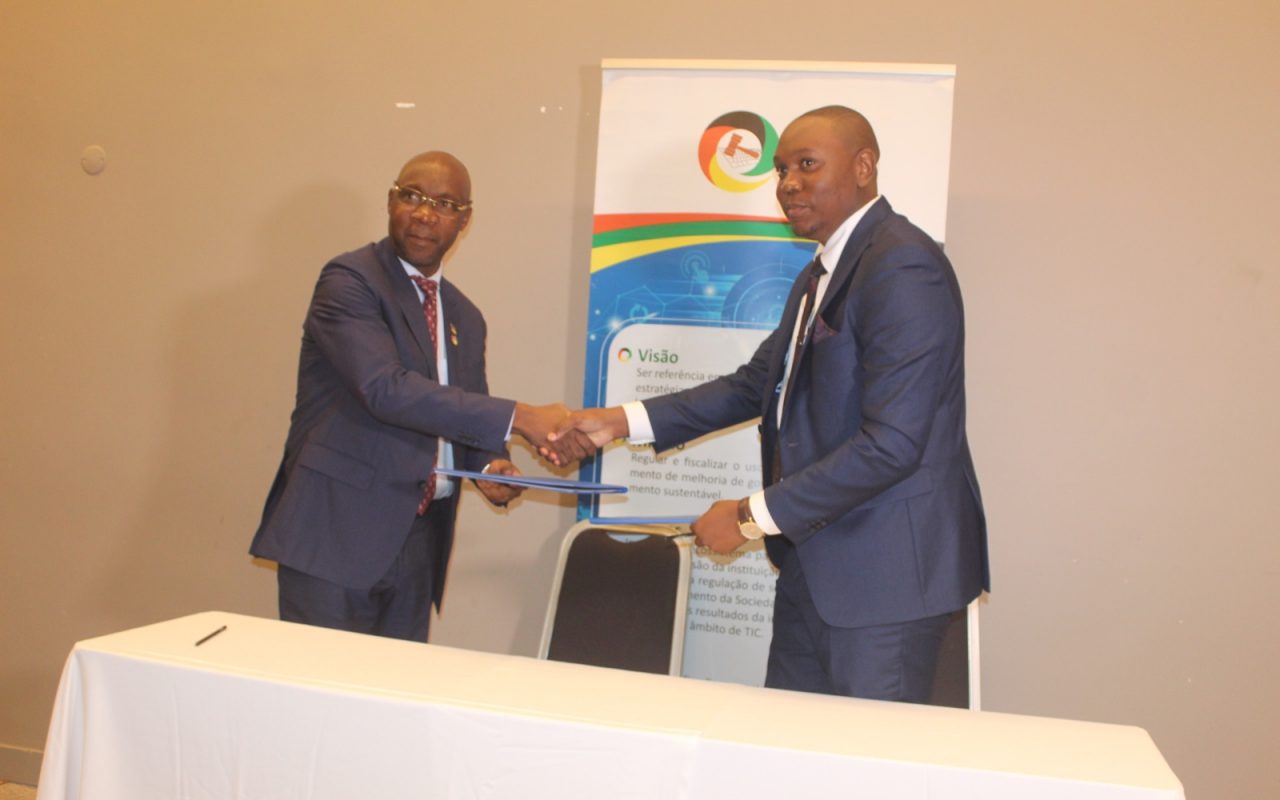
Mozambique provides a particularly concrete institutional record. A communiqué from the Instituto Nacional de Tecnologias de Informação e Comunicação, dated 8 March 2024, announces a memorandum with NRS valued at US$500,000, described as equivalent to 30 million meticais. It names INTIC board chair Lourino Chemane and NRS Africa division head Elton Kambugu as the signatories.
The announced work covered Internet governance, cybersecurity and policymaking, with NRS providing training and logistical support. The communiqué does not provide accounts or implementation reports establishing how much was subsequently disbursed or delivered.
INTIC’s separate report on the accompanying Maputo roundtable places the cooperation within Mozambique’s digital transformation and cybersecurity priorities. That national context matters. Chemane’s signature documents institutional cooperation on the stated activities; it does not establish support for NRS’s later AfriNIC election manifesto.
The question for public oversight is nevertheless substantial. When an advocacy organisation also helps develop training on governance and policymaking, the curriculum, financing and terms of institutional independence deserve scrutiny. Publication of the signed memorandum and implementation records would allow that scrutiny to move beyond an announcement.
Gabon and access to the public administration
Gabon offers an earlier example of official engagement. Gabon Mail Infos reported that the digital economy minister at the time, Jean Pierre Doukaga Kassa, presided over a workshop on 31 October 2022. The report associated NRS with support for the transition from IPv4 to IPv6 and identified Raphaël Mezui Mintsa, then responsible for promoting the digital economy, alongside NRS’s Cédric Yana.
The documented connection is to a workshop and a public capacity-building agenda. It establishes access to officials, not approval of every subsequent NRS position. Its relevance is chronological as well as institutional. NRS’s engagement with African public administrations predates the election dispute through which many readers encountered the organisation.
Mali and the local partner IT TÉLÉCOM
NRS’s account of a seminar held in Bamako on 13 August 2026 names BBC & Fils SARL as co-organiser and IT TÉLÉCOM as the local partner. The event covered IP address governance and data privacy. Because this is NRS’s own report, it establishes the partnership as publicly represented by the organiser, rather than independently documenting its contractual terms.
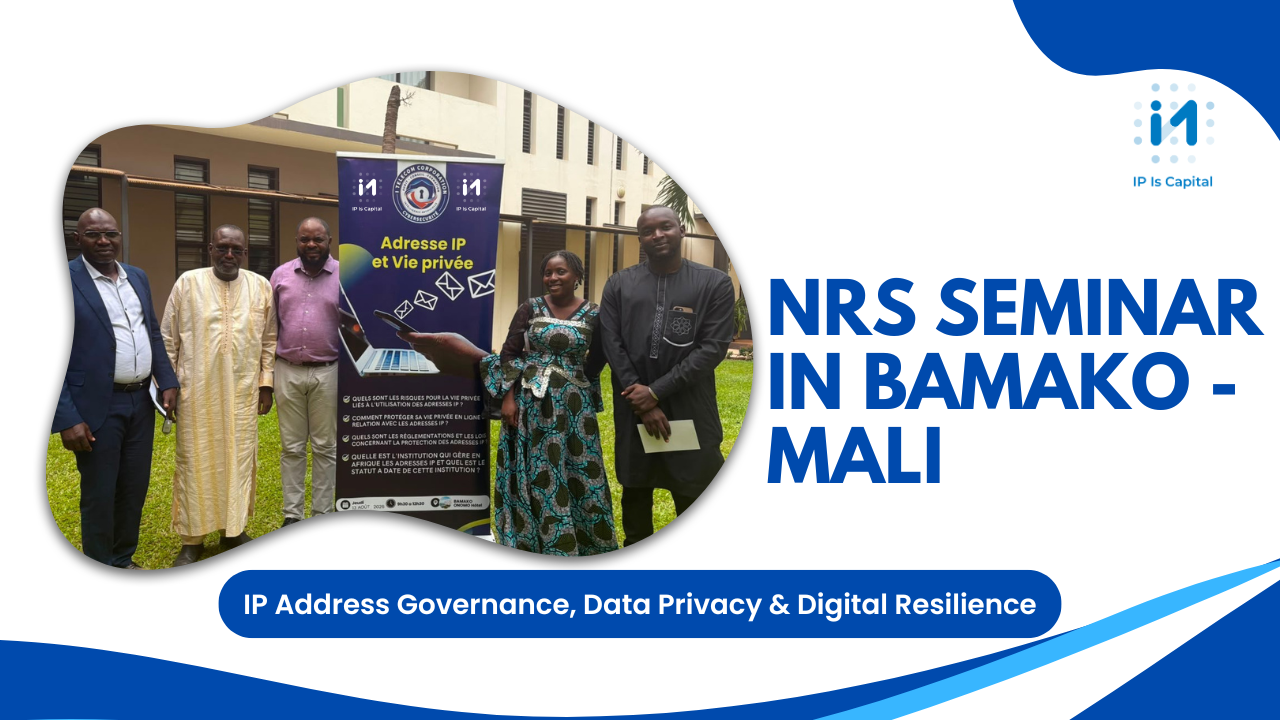
NRS also publishes a positive testimonial attributed to Mohamed Traore of IT Telecom in Mali, thanking the organisation for a seminar and its discussions on governance. The endorsement is attributed and limited to the event described.
The recurrence of BBC & Fils, already visible in Binam’s Cameroon account, connects 2 national event records. It suggests that local outreach can draw on organisers operating across borders. Contracts and financial records would be needed to determine the scale and continuity of that relationship.
Ghana and the co-host Makot Solutions
For Ghana, NRS’s own event report names Makot Solutions as co-host of a meeting at the Airport View Hotel. The page was first published on 16 April 2025, but that publication date does not establish when the meeting occurred.
The company’s documented place in this account is as a co-host named by NRS. The reviewed material does not establish which individual negotiated the arrangement or whether the partnership extended to election campaigning. Identifying the company is justified by the source; assigning an unverified personal role to its staff would not be.
Burundi and a testimonial attributed to Vestine Nahimana
NRS’s website publishes praise for its Burundi seminar attributed to Vestine Nahimana, whom it identifies as president of the National Communication Council. The testimonial presents the event as useful to Internet users and service providers. The source available here is NRS’s presentation of her comments, not an independently obtained statement from the council.
That distinction limits what the testimonial can establish. It is evidence that NRS uses her name and institutional title in its public presentation of support. It does not establish an institutional mandate for its election or property-rights programme.
NRS’s public representation record separately names Burundi Backbone System SM and links a member profile. This is a different claim from an official’s favourable seminar testimonial. It alleges organisational representation, which would need to be checked against an actual mandate and confirmation from the company.
Niger and the limits of attributed support
The same website attributes favourable feedback about a governance event to Aissata Chanoussi in Niger. It also presents supportive comments under the description of an ARCEP representative without naming that person. Neither attribution identifies an electoral commitment or supplies a written regulatory mandate.
An unnamed institutional testimonial cannot substitute for an official position. For a regulator, the identity and authority of a speaker are essential to determining what, if anything, the institution endorsed. Here, the public record leaves that question unresolved.
The mandate campaign continued after the election
The current NRS site makes representation central to its work. A page first published on 28 September 2026 says a power of attorney enables NRS to act in registry governance and legal matters, while insisting that it does not transfer a member’s addresses, assets or company. It says an election may require a separate proxy or voting instruction. It also advises members to review the scope, duration and withdrawal of the mandate with counsel.
Its April 2026 POA Start Pack goes further. It asks counsel to examine collective rights, the ability to request special meetings and written resolutions under AfriNIC’s bylaws and Mauritian company law. It highlights thresholds of 5% and 75% in its account of those mechanisms. These are NRS’s legal-review prompts, not a conclusion here that it has met a threshold or can lawfully exercise every power described.
That is why the campaign matters beyond a single board election. Gathering valid mandates could enable an organisation to coordinate interventions across governance decisions. The effect would depend on each mandate, the members’ eligibility, the particular decision and the governing rules. A declaration of support at a workshop is not a substitute for that chain of authority.
The site’s POA list names, among others, Afriland First Bank, Universite de Bamako, Unitel STP from Sao Tome, Gowifi Liberia, Business Connexion Mozambique and Altron Botswana. NRS explicitly claims that listed organisations supplied powers of attorney. The list is evidence of that claim; it is not the signed instruments, nor proof of a vote cast in June 2025. Publication in 2026 cannot establish the existence or scope of a mandate at an earlier election.
There are therefore 3 different records to keep apart. The general member directory indicates claimed membership. The public representation record indicates claimed authority to act. The separate POA page expressly claims powers of attorney. Their entries are not identical. Conflating them would inflate both the apparent size of NRS’s voting bloc and the strength of the evidence behind it.
The June slate did not become the September board
A separate election followed in September. None of the 8 names on NRS’s June slate appears in the winning board list published by South Africa’s Internet Service Providers’ Association on 18 September. ISPA itself had endorsed candidates and welcomed their election. Organised endorsement was therefore not unique to NRS. Nor can the comparison establish that every June candidate contested the later poll.
That result places a boundary on the story. NRS’s June campaign did not install its advertised slate in the subsequent September poll. The country records and the continuing mandate campaign show how the organisation pursued influence through other channels. They do not demonstrate that all its partners acted as a disciplined electoral bloc.
The early outreach preserved in the mailing lists
The public archive pushes the story back to 2021. An AfriNIC discussion on 8–9 December reproduced an invitation attributed to Fiona Nyawira Mwangi of NRS. It offered prospective members an IPv4 lease with its fee waived, cloud space, a trial VPS and access to training. Noah challenged the solicitation; Andrew Alston disputed characterising such promotion as coercion. The exchange documents a recruitment pitch and contemporary disagreement about it, not a finding that recipients were compelled to join.
On 17 May 2022, Pascal Andrianisa of Madagascar’s research and education network iRENALA reported a visit by somebody representing NRS. He said the visitor claimed to work with AfriNIC and offered free ISO-related training. The next day, NRS relationship manager Samuel Uzoechi relayed a reply signed Paul, describing NRS as independent and denying any connection to a regional registry. Both accounts belong in the record. The archive establishes that the representation claim was challenged at the time; it does not resolve exactly what the visitor said.
By January 2023, the outreach had also attracted institutional attention beyond Africa. In a governmental roundtable presentation, RIPE NCC managing director Hans Petter Holen described NRS as linked to Cloud Innovation and reported approaches to governments about a working group. That was RIPE NCC’s assessment. It corroborates the existence of concern about the outreach, while providing neither a complete list of governments approached nor a record of their responses.
What the network makes possible
The documented relationships are unequal in substance. Wollner is publicly identified as NRS president. Kambugu signed a government agreement for it. Yana and Binam appear in records of its organising activity. Other candidates are documented as recipients of NRS endorsement. Public institutions appear through agreements, event participation or NRS’s claims of representation. These roles should be investigated on their own terms.
The connection between national outreach and registry governance is nevertheless clear as an organisational ambition. Seminars assemble audiences, partnerships lend institutional visibility and mandates can create authority to act. NRS publicly advocates all 3. What remains unproved is how often an attendee became a member, a member granted a mandate, or a mandate was exercised in support of a particular electoral or legal outcome.
The next disclosures should follow that chain. Candidates can state whether they accepted NRS’s endorsement and programme. Public partners can disclose agreements, curricula and delivery records. Organisations named as principals can confirm who signed, what was authorised and whether the authority remains in force. Election administrators can publish an account of the checks performed and the irregularities established, without exposing confidential voting choices.
AfriNIC’s July 2025 advisory recognised members’ freedom to engage outside organisations while making clear that NRS was not affiliated with or endorsed by the registry. That distinction remains central to accountability. The authority to advocate a policy comes from freedom of association. The authority to act in somebody else’s name requires a valid mandate.
This investigation identifies public relationships and unanswered questions. It does not establish that the named candidates were paid for their support, that institutional partners surrendered their independence or that the entire judiciary acted at Lu’s direction. Its central finding is more specific. NRS has combined an electoral programme, identifiable organisers, national partnerships and a continuing campaign for delegated authority. The test is whether the authority claimed in public matches the consent actually given.
The question that began with Dave in Prague therefore returns at the end of the investigation. Who has agreed to what? His interview, as I recall it, and NRS’s subsequent public endorsement establish 2 different records, not a private contract between them. Across the wider network, the same scrutiny must follow each claim of support. Reputation can attract trust; it cannot stand in for consent.
Continue the investigation
Part 1 examines the commercial interests, companies and institutional disputes surrounding Lu Heng. Part 2 examines NRS’s representation claims and its relationship with Internet governance institutions. This instalment follows the people and partnerships through which the organisation’s work reaches national audiences.
Documented calendar of NRS engagements in Africa
This register brings together 54 dated records, announcements and incompletely dated activity reports located in the reviewed sources, from the 2021 mailing-list outreach to the reporting cut-off of 12 November 2026. It includes training, institutional visits, agreements and regional mobilisation. It is the full record reconstructed for this investigation, not a claim to possess NRS’s internal diary or a complete account of every private engagement.
A reported event means that the cited organisation or publication says it occurred. An announcement establishes a plan only. “By” dates bound a record without inventing an event day. Website publication and update dates are not substituted for activity dates. Similar recaps may overlap, so the number of records must not be presented as a count of distinct completed events. Institutional participation does not, by itself, imply support for NRS’s electoral programme.
2021–2022
- 8–9 December 2021Regional outreach · email
Public-list record. A recruitment message attributed to Fiona Nyawira Mwangi offered membership benefits and training. This dates the archived exchange, not an in-person event.
- By 17 May 2022Madagascar · iRENALA
Recipient’s account. Pascal Andrianisa reported an institutional visit and a training offer. NRS disputed the claimed AfriNIC affiliation on 18 May. The visit’s exact day is unknown.
- 5 August 2022Zambia
NRS reports holding its first Better Internet training with BICODE. The account provides the event date but does not specify the city.
- 16 August 2022Abuja · Nigeria
NRS reports training with Bioni on IPv6, governance and cybersecurity. Named speakers are Chike Chike Chukwurah, Simon Emieje and Osunde Amenze Azuka.
- 31 August 2022 · announcedLocation unspecified
The Abuja recap announces a next training for 31 August. It does not establish its location or that it took place; no separate completed event is counted.
- 27 September 2022Yaoundé · Cameroon
NRS reports a governance and security workshop, naming MINPOSTEL, ART, ANTIC, CAMTEL, CAMPOST and SUP’PTIC as collaborators. These institutional roles are attributed to NRS’s account.
- 31 October 2022Libreville · Gabon
Gabon Mail Infos reports an IPv4/IPv6 governance workshop involving minister Jean Pierre Doukaga Kassa, Raphaël Mezui Mintsa and NRS’s Cédric Yana. Published 1 November.
- 11 November 2022 · announcementAfrican programme
NRS announced a programme expansion to 25 countries, quoting Erick Renson. It named completed and planned destinations without a day-by-day itinerary. The country lists are reproduced in the coverage note below.
- 27 December 2022Bangui · Central African Republic
NRS reports training at Ledger Plaza, identifying the ministry responsible for the digital economy, posts and telecommunications as co-host. Reported subjects include governance and the Internet ecosystem.
2023
- 22 March 2023Nouakchott · Mauritania
NRS reports an IPv6 workshop at Nouakchott Hotel with NIC-MAURITANIE and HI SERVICES, naming the digital-transition ministry as sponsor. The country follows the body, not the erroneous title.
- 25 March 2023 · date disputedDjibouti · Sheraton Hotel
NRS reports a governance event for telecom and Internet operators. Its text calls this date a Sunday, although 25 March 2023 was Saturday. The numeric date is retained with that unresolved discrepancy.
- 31 May 2023Cabo Verde · Perola Hotel
NRS reports an Internet governance event with panel discussions and networking. Its account does not identify the individual speakers or a local organising partner.
- 11 August 2023Bujumbura · Burundi
NRS reports a governance seminar at Kiriri Garden Hotel. The event account and the separate testimonial attributed to Vestine Nahimana are different records; attendance is not an electoral mandate.
- 20 October 2023Kigali · Rwanda
NRS reports a governance event at Sainte Famille Hotel. It describes engagement with the Rwandan digital sector without naming a formal institutional co-host.
2024
- 8 March 2024Maputo · Mozambique
Government-confirmed roundtable and memorandum with INTIC. Lourino Chemane and Elton Kambugu signed the agreement. The financial commitment announced in the communiqué is not evidence of subsequent disbursement.
- By 10 April 2024Lagos · Nigeria
The Sun reports a Black Diamond Hotel seminar and Williams Adebayo’s appeal for electoral participation. A similar NRS recap gives 4 April without a year. The press publication dates the available record, not conclusively the event.
- 14 June 2024Kinshasa · DR Congo
NRS reports an Internet governance and cybersecurity workshop at Hotel Memling, from 09:00 to 15:00. Individual speakers and a local partner are not identified in the account.
- 11 December 2024Conakry · Guinea
NRS’s report describes a privacy and IP-address meeting at Kaloum Hotel organised by BBC with NRS. It names VDC, SkyVision, GuiLab, KAGNY and Mouna Group among represented organisations. Publication followed in December 2025.
2025
- 22 February 2025Abuja · Nigeria
NRS reports a session at Novare Central on business growth using AI and Internet governance. The recap matches the date in its event announcement.
- 15 March 2025Nairobi · Kenya
NRS reports a governance discussion including AfriNIC’s role and Africa’s influence over Internet policy. Both its announcement and recap give this date.
- 28 March 2025 · announcedJohannesburg · South Africa
NRS advertised training. A separate cybersecurity recap names 54 on Bath but gives no event date, so it cannot independently confirm this day. The archive’s timezone information is inconsistent.
- 29 March 2025Lagos · Nigeria
NRS reports training on customer relationships, AI in cybersecurity and Internet governance. The account explicitly frames the meeting as relationship-building with resource members.
- 23 April 2025Douala · Cameroon
NRS reports a workshop at Krystal Palace Hotel with BBC & FILS on governance and cybersecurity. It says the approaching AfriNIC elections were known to attendees.
- 17 May 2025Abuja · Nigeria
NRS reports an AI and governance meeting at Novare Central, Wuse Zone 5. Its recap says several participants enrolled as network members during the session. No signed electoral mandates are reproduced.
- 19 June 2025Regional campaign · email
NRS’s 8-candidate AfriNIC slate is preserved in a campaign email reproduced on the ZANOG mailing list. It is a dated campaign record, not a record of a physical meeting.
- By 9 July 2025Regional outreach · online
AfriNIC’s advisory reports NRS invitations to online meetings and requests for powers of attorney. This dates the registry’s warning; it does not identify every meeting date or recipient.
- 11 July 2025Regional campaign
NRS issued a statement defending collective representation and its role in facilitating proxy participation. Cloud Innovation issued a separate statement advocating a court-supervised winding-up. These are published positions, not events at a shared venue.
- 16 October 2025 · announcedCotonou · Benin
NRS advertised governance and cybersecurity training at Golden Tulip Hotel Le Diplomate. ISOC Benin publicly distanced itself on 9 October. The announcement and objection do not establish that the workshop went ahead.
2026
- 19 February 2026Bamako · Mali
NRS’s recap and photographed banner document a seminar at Onomo Hotel. BBC & Fils SARL and IT TÉLÉCOM are named as organisers/partners. Topics include IP governance, data privacy and IPv6.
- 21 February 2026 · announcedHarare · Zimbabwe
NRS advertised a Rainbow hotel session on treating IP addresses as economic assets and monetising resources. A dated post-event account was not located.
- 14 March 2026 · announcedAbuja · Nigeria
NRS advertised a Novare Central session on IP value and governance. The named speakers are Adewara Samsondeen and Johnson Saka. An announcement alone does not confirm attendance or completion.
- 21 March 2026 · announcedLagos · Nigeria
NRS advertised an IP-value and governance session at Black Diamond Hotel, Victoria Island, naming Godwin Ezekiel and Lawal Kamaldeen as speakers. Completion was not independently established.
- 1 April announced / 8 April reportedYaoundé · Cameroon
An announcement gives 1 April. A later recap dates a cybersecurity and IP-management meeting at Djeuga Palace to 8 April and says participants joined an NRS online group. A postponement is plausible but unconfirmed; these are not counted as 2 completed events.
- 16 April 2026Dakar · Senegal
NRS reports a seminar at Onomo Hotel on IP addresses, privacy, risks and regulatory frameworks, directed at telecom, ISP and policy participants.
- 20 June 2026Enugu · Nigeria
NRS reports approximately 56 participants at a meeting on governance and IP resources as capital. Attendance and enthusiasm are the organiser’s claims, not evidence of individual voting instructions.
- 24–25 June 2026Regional campaign · AfriNIC meeting
NRS’s 24 June letter urged members to reject financial-statement resolutions at the 25 June annual meeting and challenge the board’s authority. This records the campaign instruction, not its legal validity or the resulting votes.
- 13 August 2026Bamako · Mali
NRS reports a further seminar at Onomo Hotel, with BBC & Fils SARL and local partner IT TÉLÉCOM. The report gives 09:00–14:30 and addresses governance, privacy and resource security. It is distinct from February’s meeting.
Reported activities with incomplete dates
- Day and year unknownGhana · Airport View Hotel
NRS’s recap names Makot Solutions as co-host. The page is dated 16 April 2025; that is not the event date.
- Day and year unknownTogo
NRS reports training on governance and cybersecurity, with photographs. The account names neither a day nor an individual local organiser.
- Day and year unknownMali
An older NRS recap describes completed governance training but supplies no event date or venue. It cannot be assigned to either dated 2026 Bamako seminar.
- 22 December · year unknownNiamey · Niger
NRS reports a governance event at NOOM Hotel. The body states 22 December without a year; the page’s April 2025 publication date does not resolve it.
- 30 November · year unknownConakry · Guinea
NRS reports a governance event at Hotel Onomo. The year is absent. This venue differs from the separately dated Kaloum Hotel meeting of December 2024.
- 6 December · year unknownMadagascar · Hotel Novotel
NRS reports a Better Internet event. The text supplies a day and month but no year, and does not establish that this followed its tentative October announcement.
- October · tentative, year unknownMadagascar
The poster proposes October without a confirmed day or year. NRS’s archive notes that an older calendar supplied 1 October 2025 without poster confirmation. This remains an announcement.
- 29 February · year unknownMorocco · Casablanca stated
NRS’s account names Casablanca and a venue called Hotel Rabat, without resolving that geographical ambiguity. It gives 29 February but no year. Neither 2024 nor another year is silently inferred.
- Day and year unknownSenegal
NRS reports completed Better Internet training but does not name a city, date or co-host. This record is separate from the explicitly dated April 2026 Dakar report.
- Day and year unknownOuagadougou · Burkina Faso
NRS publishes a recap and event photographs, thanking an unnamed co-host. The April 2025 webpage date is not an event date.
- Day and year unknownBenin
An older NRS recap describes completed training on governance and cybersecurity. It does not date the activity and cannot be used to prove that the October 2025 Cotonou workshop occurred.
- Day and year unknownMauritius
NRS reports an event covering cybersecurity, AI, resilience and governance. It does not identify the venue, date or co-host by name. This is distinct from the Mauritania report with the mistaken title.
- Day and year unknownJohannesburg · South Africa
An older NRS training recap supplies no date, venue or named co-host. Its relationship to the dated March 2025 announcement is unresolved.
- Day and year unknownLagos · Nigeria
NRS identifies Soft Alliance as co-host of a Better Internet event. The available recap lacks an event date.
- Day and year unknownLagos · Nigeria
A further NRS recap describes another Lagos event without naming a date, venue or co-host. Its distinctness from other undated Lagos reports cannot be established.
- Day and year unknownDurban · South Africa
NRS reports a governance meeting with resource members. No date appears in the recap. A November 2022 promotional overview independently places Durban in its early training itinerary, without fixing the day.
- Day and year unknownDouala · Cameroon
NRS labels this its fifth event and describes governance and cybersecurity training. The ordinal does not establish a date, and the account cannot simply be substituted for the April 2025 Douala report.
Coverage of the announced continental programme
The 11 November 2022 release claimed that training had already been completed in Zambia, Kenya, Nigeria, South Africa, Cameroon, Burkina Faso, Gabon and the Republic of Congo. Kenya appeared twice in its original list. For November and December, it announced further sessions in Nigeria, Morocco, Gabon, South Africa, Cameroon, the Central African Republic, Tanzania, South Sudan, Botswana, The Gambia, Benin, Senegal, Togo, Niger, Mauritius, Côte d’Ivoire, Mali and Guinea. The release’s headline referred to 25 countries; it did not supply 25 dated itineraries. These are NRS’s retrospective claims and forward plans, not independent confirmation that every proposed stop occurred.
The calendar covers every African event announcement in NRS’s current 11-entry events directory and the relevant activity accounts located through its article sitemap, alongside the public mailing lists, the Mozambique government records, the Gabon reporting and ISOC Benin’s notice. Several reports were republished under April 2025 webpage dates. Missing years, contradictory dates, unnamed partners and overlapping recaps remain visible above. Private meetings, unindexed material and activities not recorded in the reviewed archives may be absent.
Prague is discussed in the article because of its relevance to the AfriNIC coalition and the author’s direct testimony. It is outside Africa and was not an NRS event, so it is not inserted into the continental engagement calendar.